

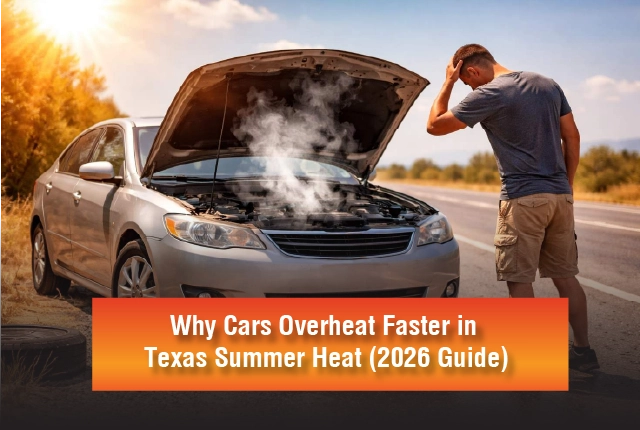
Texas summers are known for their extreme temperatures, long highway drives, and intense heat waves that place enormous pressure on modern vehicles. Whether you drive a dependable sedan like the Toyota Camry, a rugged Ford F 150, or a family SUV such as the Chevrolet Tahoe or Honda CR V, understanding why cars overheat Texas summer conditions is essential for protecting your engine and avoiding expensive breakdowns.
As temperatures across Texas continue rising in 2026, drivers are experiencing more frequent overheating issues caused by prolonged heat exposure, increased traffic congestion, and insufficient vehicle maintenance. Understanding the major causes and prevention methods can help drivers maintain safer and more reliable vehicles throughout the hottest months of the year.
The combination of extreme climate conditions and heavy daily driving makes cars overheat in Texas summer conditions more common than many drivers realize.
Why Texas Summer Heat Is Tough on Vehicles
Texas experiences some of the harshest summer driving conditions in the United States. Prolonged heat can place intense stress on engines, cooling systems, batteries, tires, and transmission components.
The biggest risks during extreme summer temperatures include:
- Increased engine temperatures during traffic congestion
- Faster coolant evaporation and radiator strain
- Higher risk of component wear and fluid breakdown
- Reduced cooling system efficiency
- Greater pressure on air conditioning and engine systems
Understanding Texas summer car overheating risks can help drivers prepare their vehicles before temperatures become dangerous.
Understanding Why Cars Overheat in Extreme Heat
Vehicle engines naturally generate heat while operating. Cooling systems are designed to regulate temperatures, but extreme environmental conditions can overwhelm these systems if components are weak or poorly maintained.
Common overheating situations include:
- Long highway drives under direct sunlight
- Stop and go traffic in urban areas
- Towing heavy loads during summer travel
- Low coolant levels or leaks
- Aging radiator components
Modern vehicles rely heavily on properly functioning cooling systems to maintain optimal engine performance.
Step by Step: Main Causes of Summer Overheating
Low Coolant Levels
Coolant plays a critical role in regulating engine temperature. Low coolant levels reduce the system’s ability to transfer heat effectively.
Drivers should regularly inspect coolant reservoirs and address leaks immediately.
Radiator System Problems
Damaged radiators, clogged coolant passages, or failing cooling fans can significantly reduce heat dissipation efficiency.
Many cases of radiator problems in hot weather conditions are caused by neglected maintenance or aging cooling components.
Faulty Thermostat
A malfunctioning thermostat can prevent coolant from circulating properly through the engine and radiator.
This causes temperatures to rise rapidly, especially during heavy summer driving.
Cooling Fan Failure
Cooling fans help regulate airflow through the radiator during slow traffic conditions.
If the fan motor or sensors fail, overheating can occur quickly in city driving environments.
Engine Oil Breakdown
High temperatures can cause engine oil to lose viscosity and lubrication effectiveness.
Poor lubrication increases friction and internal engine heat buildup.
Understanding these engine overheating causes summer conditions can help drivers identify issues before serious damage occurs.
Warning Signs Your Vehicle May Be Overheating
Drivers should never ignore early warning signs of overheating problems.
Common indicators include:
- Rising temperature gauge readings
- Steam coming from the hood
- Burning smells from the engine bay
- Reduced air conditioning performance
- Dashboard temperature warning lights
- Engine knocking or unusual noises
Recognizing these symptoms early can prevent catastrophic engine failure.
Texas Summer Vehicle Cooling Checklist
| Inspection Area | What to Check |
| Coolant Level | Proper fluid level and condition |
| Radiator | Leaks, blockages, or corrosion |
| Cooling Fans | Proper fan operation |
| Thermostat | Correct temperature regulation |
| Engine Oil | Clean oil at proper level |
| Hoses & Belts | Cracks or wear signs |
Following proper summer car maintenance USA practices helps reduce overheating risks during peak summer temperatures.
Common Mistakes Drivers Should Avoid
Even experienced drivers can unknowingly increase overheating risks during summer months.
Here are common mistakes to avoid:
- Ignoring coolant leaks
- Delaying radiator servicing
- Driving with warning lights active
- Skipping regular oil changes
- Overloading vehicles during extreme heat
- Continuing to drive after overheating begins
Avoiding these issues can significantly improve vehicle reliability and engine longevity.
Pro Tips to Prevent Overheating in Texas Heat
Drivers can reduce overheating risks by following smart maintenance habits and driving practices.
Helpful prevention tips include:
- Check coolant levels regularly
- Service cooling systems before summer begins
- Inspect radiator hoses and belts frequently
- Avoid excessive idling during extreme heat
- Park in shaded areas whenever possible
- Use manufacturer recommended coolant types
Learning how to prevent car overheating Texas conditions can save drivers from expensive roadside emergencies and engine repairs.
How Extreme Heat Impacts Modern Engines
Modern vehicles are more technologically advanced than ever, but they also operate with tighter engine tolerances and complex cooling systems.
Extreme heat can affect:
- Turbocharged engine performance
- Hybrid cooling systems
- Battery efficiency
- Transmission temperatures
- Air conditioning performance
As Texas temperatures continue increasing in 2026, preventative maintenance becomes even more important for long term vehicle reliability.
Key Takeaways
- Texas summer temperatures place major stress on vehicle cooling systems
- Low coolant and radiator issues are leading overheating causes
- Understanding Texas summer car overheating risks helps drivers prepare early
- Routine inspections reduce the chance of costly engine damage
- Following proper summer car maintenance USA habits improves vehicle reliability
- Cooling system maintenance is essential during extreme summer driving conditions
Final Remarks
Extreme summer temperatures across Texas create challenging driving conditions that can quickly expose weaknesses in vehicle cooling systems. From heavy highway traffic to prolonged heat exposure, multiple factors contribute to overheating risks during the hottest months of the year.
Understanding why cars overheat Texas summer conditions occur allows drivers to take preventative action before serious engine damage develops. Regular coolant inspections, radiator maintenance, and early warning sign detection can significantly improve vehicle reliability and road safety.
By staying proactive with seasonal vehicle care and following proper maintenance routines, drivers can enjoy safer, smoother, and more dependable driving throughout the intense Texas summer season.
Looking to stay updated on vehicle maintenance trends, summer driving protection tips, and evolving automotive care practices in 2026? Explore expert automotive insights and practical guides designed to help drivers maintain safer and longer lasting vehicles across Texas and the United States.
For professional vehicle inspections, radiator diagnostics, cooling system maintenance, and expert overheating prevention support, explore trusted automotive specialists offering advanced repair solutions and summer vehicle protection services tailored for modern Texas driving conditions.
Concerned about engine overheating during long summer drives across Texas? Mr. Lee Car Experts provides professional automotive guidance, cooling system care recommendations, radiator performance checks, and preventive maintenance solutions tailored to help drivers maintain safer, more efficient, and road ready vehicles throughout the demanding 2026 summer season.
FAQs
1. Why do cars overheat more often during Texas summers?
Extreme temperatures place additional stress on vehicle cooling systems, increasing the risk of coolant loss, radiator strain, and engine overheating.
2. What are the most common causes of engine overheating?
Low coolant levels, faulty thermostats, damaged radiators, and cooling fan failures are among the most common overheating causes.
3. How can I prevent overheating during hot weather?
Regular cooling system maintenance, coolant checks, and radiator inspections help reduce overheating risks.
4. Are radiator problems common during summer heat?
Yes. In many cases of radiator problems in hot weather conditions occur due to clogged radiators, coolant leaks, or aging cooling components.
5. Why is summer maintenance important for vehicles?
Proper maintenance helps improve engine reliability, cooling performance, fuel efficiency, and overall driving safety during extreme temperatures.

