

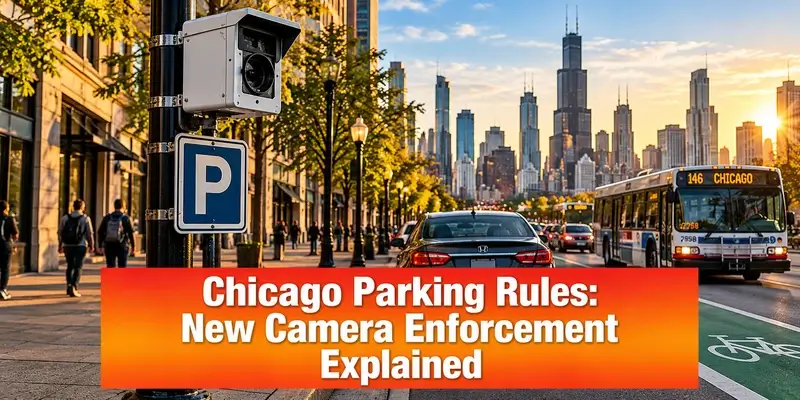
Parking in Chicago has never been as simple as finding an open curb and putting the car in park. A single block can have different restrictions, meter hours, loading rules, bus lanes, bike lanes, or residential parking requirements, and in 2026, some violations can also be documented by automated camera systems.
“In Chicago, the safest parking strategy is simple whereas read the sign, check the zone and know the restriction before you leave the car”.
The city’s Smart Streets program has introduced Automated Bus Lane Enforcement technology on CTA buses and city vehicles. The pilot targets specific violations rather than replacing all traditional parking enforcement. CTA reported that six camera-equipped buses had recorded more than 13,000 warnings and violations since enforcement began in October 2025, while the pilot area later expanded to 19 square miles and approximately 500 additional bus stops.
How Chicago's New Camera Enforcement Works
Chicago’s automated enforcement system is best understood as targeted technology, not a blanket camera network covering every parking meter.
Under the Smart Streets program, automated cameras can identify certain violations involving bus lanes, bike lanes and bus stops within the respective pilot area. CTA’s ABLE systems are mounted on buses, while city vehicles can also participate in automated enforcement.
When a camera-equipped vehicle records a potential violation, the evidence is not simply turned into a ticket without review. Chicago’s ABLE program calls for video evidence to undergo an initial review before being transmitted to the Chicago Department of Finance, which has the final authority to determine whether a violation occurred and issue enforcement.
Chicago’s municipal code also recognizes automated parking enforcement systems and provides that a properly reviewed image of a covered offense can serve as prima facie evidence of a violation within the applicable pilot area.
Which Chicago Parking Violations Should You Watch?
Chicago parking enforcement covers far more than expired meters. The city’s traffic code contains numerous restrictions, with fines varying according to the specific violation.
1. Bus Lanes and Bus Stops
Bus-lane enforcement is one of the most significant areas affected by the Smart Streets pilot.
The Chicago code prohibits unauthorized vehicles from using designated bus lanes in the pilot area, subject to specific exceptions such as making a right turn or accessing an allowable driveway or curbside location. Some corridors also have specific operating hours for bus lanes.
The Smart Streets pilot specifically allows automated enforcement of qualifying bus-lane, bus-stop, and bike-lane violations.
2. Bike Lanes
Bike lanes are another area where drivers need to be particularly careful. Chicago’s parking code contains restrictions on parking and standing in bicycle lanes and other designated roadway areas. The automated enforcement pilot specifically includes bike-lane violations.
This matters on busy streets where a bike lane may initially look like a convenient place to wait while collecting takeout or picking up a passenger. If the space is marked for bicycles, don’t treat it as temporary parking.
3. Metered Parking
Chicago’s metered parking system remains an important part of everyday city driving. The ParkChicago system allows drivers to pay using the mobile app or on-street pay boxes. However, the most important detail is the six-digit zone number.
ParkChicago states that each block and even opposite sides of the same street can have different parking restrictions, hours or maximum stay limits. Entering the wrong zone number can result in a citation.
Chicago’s parking meter rates also vary by location. ParkChicago currently lists general rates of $2.50 per hour outside the Loop and Central Business District, $4.75 in the Central Business District and $7.00 in the Loop, although individual blocks can have different rules and rates.
4. Fire Hydrants, Crosswalks and Other No-Parking Areas
Some of the most expensive parking mistakes have nothing to do with technology. Chicago’s parking code includes restrictions around fire hydrants, crosswalks, intersections, driveways, loading areas and other locations where stopping or parking can create a safety or traffic problem. The applicable fine depends on the exact code section.
Chicago Parking Fines: Why the Exact Violation Matters
Chicago uses different fine amounts for different traffic-code violations. The city’s current code lists penalties ranging from relatively small fines to $250 or more for certain parking, standing and compliance violations.
| Parking issue | What drivers should know |
| Bus lane | Automated enforcement may apply within the Smart Streets pilot area |
| Bus stop | Covered by the automated enforcement pilot |
| Bike lane | Covered by the automated enforcement pilot |
| Metered parking | Pay using the correct zone and follow posted hours |
| Fire hydrant | Certain violations carry a $150 fine |
| Crosswalk restrictions | Specific distance and location rules apply |
| Loading zone | Follow the posted use and time restrictions |
| Residential parking | Permit and posted restrictions may apply |
The ParkChicago Zone Trick That Can Prevent a Ticket
One of the easiest mistakes to make is entering the wrong zone number. Suppose you park on one side of a street and see another ParkChicago sign across the road. The numbers may look similar, but they identify different parking locations.
ParkChicago says its six-digit zone number uniquely identifies where you are parked. Because restrictions and hours can differ from one side of the street to the other, drivers should use the zone number displayed for the side where their vehicle is located.
What Happens If You Get a Chicago Parking Ticket?
Chicago provides an official system for searching, paying and contesting parking and automated camera tickets.
If you believe a ticket is incorrect, useful evidence can include:
- Photos of the vehicle's location
- Photos of signs and curb markings
- ParkChicago payment records
- Receipts or transaction records
- Evidence showing a temporary restriction was not properly posted
- Other documentation relevant to the specific violation
Chicago’s hearing process allows motorists to contest qualifying violations online or through other available hearing procedures. Chicago’s payment system distinguishes between the initial Notice of Violation, later determinations and final determinations. Unresolved violations can accumulate penalties and eventually contribute to vehicle immobilization or seizure procedures under the city’s rules.
5 Smart Chicago Parking Hacks for 2026
1. Read the sign before opening the parking app
The app helps you pay, but the physical signage remains critical. Temporary construction restrictions, street cleaning, special events and other curb changes can affect where you may legally park.
2. Check both sides of the street
Never assume the parking rules are identical across the road. ParkChicago specifically notes that opposite sides of a street can have different restrictions and hours.
3. Don't use hazard lights as a parking permit
Hazard lights do not make a prohibited parking or standing maneuver legal. If the curb is restricted, the safer option is to find a legal loading or parking location.
4. Take a quick photo when signage is confusing
If construction signs, temporary restrictions or multiple signs make the curb difficult to understand, photograph the area before leaving the vehicle. If you later need to contest a citation, contemporaneous evidence may help establish what was visible.
5. Check your ticket instead of guessing
The Chicago Municipal Code contains numerous parking violations with different fines. Look up the exact violation code and deadline associated with your notice rather than relying on a social-media post or generic parking guide.
Final Thoughts
The biggest development is not a complete replacement of parking officers with cameras. It is the growing use of automated enforcement for specific curb and transit-related violations. CTA’s 2026 budget documents describe plans for additional bus-mounted cameras for automated enforcement of bus lanes, bus stops and bike-lane violations. The current Smart Streets pilot therefore gives drivers a preview of how technology may increasingly be used to keep priority lanes clear.
At the same time, Chicago continues to use traditional parking enforcement, mobile ticketing technology and its established parking-ticket adjudication system. For drivers, the practical change is straightforward. Don’t park based on whether you see an enforcement officer. Park based on whether the location is actually legal. That mindset works whether enforcement comes from a parking enforcement aide, a city vehicle or an automated camera system.
Frequently Asked Questions
Are Chicago parking tickets issued by cameras in 2026?
Yes, Chicago allows automated enforcement for certain covered parking and standing violations. The Smart Streets pilot specifically supports automated enforcement involving bus lanes, bike lanes and bus stops within the designated area. Not every Chicago parking violation is automatically camera-enforced.
How do I avoid a Chicago parking ticket when using ParkChicago?
Check the six-digit ParkChicago zone number, enter the correct license plate, verify the rate and maximum stay, and read the physical signs on the same side of the street. ParkChicago warns that different blocks and sides of streets can have different restrictions.
Can I contest an automated Chicago parking ticket?
Yes. Chicago provides an online system for searching and contesting parking and automated camera tickets. If you believe the citation is incorrect, review the notice and submit relevant evidence through the city’s contest process.
If you have any car problem, need practical car tips, or want to stay updated on the latest U.S. car trends, news, and vehicle launches, check out Mr. Leecar experts

