

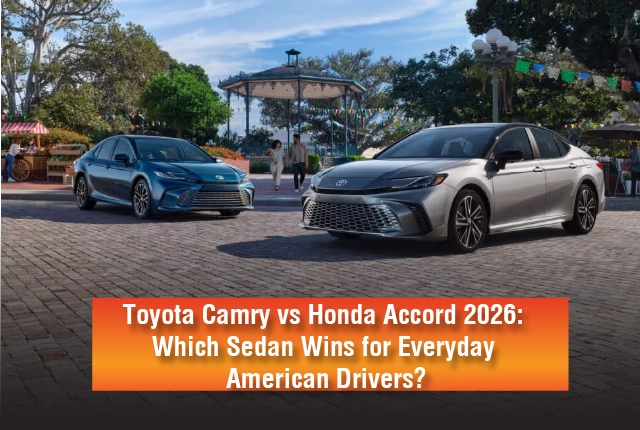
The midsize sedan segment continues to dominate American roads in 2026, offering drivers a balance of comfort, fuel efficiency, technology, and long term reliability. Among the most trusted names in this category, the Toyota Camry and Honda Accord remain top choices for commuters, families, and professionals alike. Whether you are upgrading from an older sedan or searching for a dependable daily driver, understanding the differences between these two popular models is essential.
In this detailed comparison of Toyota Camry vs Honda Accord 2026, we explore performance, interior comfort, technology, fuel economy, pricing, and overall value to help American drivers choose the right sedan for their lifestyle and driving needs.
Why the Toyota Camry and Honda Accord Remain Popular in America
For decades, both models have built strong reputations for reliability, comfort, resale value, and affordability. The 2026 versions continue improving with smarter safety systems, refined interiors, hybrid efficiency, and updated technology features.
Drivers across cities, suburbs, and highways continue choosing these sedans because they offer:
- Excellent daily driving comfort
- Strong fuel efficiency
- Advanced driver assistance technology
- Spacious interiors for families
- Reliable long term ownership experience
- Lower maintenance costs compared to many rivals
Understanding the Key Differences in 2026
The latest versions of the Camry and Accord bring noticeable improvements in driving dynamics, efficiency, and cabin refinement.
- Updated hybrid focused powertrain lineup
- Improved infotainment technology
- Strong reputation for reliability
Honda Accord 2026 Highlights
- Spacious and premium feeling interior
- Sportier steering and handling response
- Advanced digital display systems
- Comfortable rear passenger space
- Efficient turbocharged and hybrid options
The debate around Toyota Camry vs Honda Accord 2026 often comes down to personal driving preferences. Some drivers prioritize comfort and efficiency, while others prefer sharper handling and modern cabin styling.
Step by Step: Which Sedan Fits Different Drivers?
Daily Commuters
Drivers with long highway commutes may appreciate the Camry’s smooth ride and excellent fuel economy.
The updated Toyota Camry fuel economy vs Honda Accord 2026 comparison shows both vehicles delivering impressive efficiency, especially in hybrid variants.
Family Drivers
Families looking for spacious rear seating and a refined cabin may lean toward the Accord.
Both vehicles offer advanced safety technology including lane assist, adaptive cruise control, and collision mitigation systems.
Budget Conscious Buyers
Pricing plays a major role for many buyers.
The latest Toyota Camry vs Honda Accord price comparison 2026 reveals competitive pricing structures, though trim selections and hybrid options can significantly affect total cost.
Drivers Seeking Sportier Performance
The Accord generally offers more responsive steering and a slightly more engaging driving experience.
Meanwhile, the Camry focuses more on smooth comfort and predictable everyday performance.
Features Overview
| Feature | Toyota Camry 2026 | Honda Accord 2026 |
|---|---|---|
| Engine Options | Hybrid focused lineup | Turbo and hybrid options |
| Ride Comfort | Smooth and quiet | Balanced and sporty |
| Interior Space | Comfortable cabin | More rear legroom |
| Fuel Economy | Excellent hybrid efficiency | Strong efficiency |
| Technology | User friendly infotainment | Modern digital displays |
| Safety Features | Toyota Safety Sense | Honda Sensing |
| Driving Feel | Relaxed daily driving | More engaging handling |
Fuel Economy and Hybrid Performance
Fuel efficiency remains one of the biggest decision factors for midsize sedan buyers in 2026.
The growing interest in Toyota Camry vs Honda Accord hybrid 2026 comparisons highlights how both manufacturers are investing heavily in hybrid technology.
Toyota continues leading with highly refined hybrid systems designed for smooth urban commuting and lower fuel costs.
Honda also delivers strong hybrid efficiency while maintaining responsive acceleration and balanced driving dynamics.
Drivers prioritizing lower fuel expenses and environmentally conscious commuting will find both sedans highly competitive in today’s market.
Common Mistakes Buyers Should Avoid
Even experienced car buyers sometimes overlook important details when comparing sedans.
Ignoring Long Term Ownership Costs
Maintenance, insurance, fuel expenses, and resale value matter beyond the purchase price.
Choosing Features Over Daily Comfort
Technology is important, but seat comfort and ride quality impact daily driving satisfaction more.
Skipping Hybrid Considerations
Modern hybrids now offer excellent reliability and long term fuel savings.
Not Comparing Trim Levels Carefully
The latest Toyota Camry vs Honda Accord price comparison 2026 varies significantly depending on trim packages and optional technology upgrades.
Pro Tips Before Buying a Midsize Sedan
- Test drive both models in city and highway conditions
- Compare insurance costs before purchasing
- Review hybrid warranty coverage carefully
- Check available financing and lease offers
- Prioritize safety and long term reliability
Many experts still consider these vehicles among the best midsize sedan for American drivers 2026 due to their balanced ownership experience and practical everyday usability.
Key Takeaways
- Both sedans remain top choices for American drivers in 2026
- Toyota Camry focuses heavily on comfort and hybrid efficiency
- Honda Accord delivers a sportier and more premium cabin feel
- Fuel economy remains excellent in both hybrid models
- Safety technology and long term reliability continue improving
The competition between Toyota Camry vs Honda Accord 2026 continues shaping the midsize sedan market as both brands evolve with smarter features and improved efficiency.
Final Remarks: Which Sedan Should You Choose?
Choosing between the Toyota Camry and Honda Accord ultimately depends on your lifestyle, driving habits, and personal preferences. Drivers seeking relaxed comfort, trusted reliability, and outstanding hybrid efficiency may find the Camry more appealing. Those wanting a more engaging driving experience with upscale interior styling may prefer the Accord.
Both vehicles continue setting high standards in the midsize sedan category and remain among the smartest automotive investments for everyday American driving in 2026.
As the automotive market shifts toward smarter efficiency, hybrid innovation, and advanced safety technology, these two legendary sedans continue proving why they remain favorites among millions of drivers across the United States.
Looking to stay updated on the latest car comparisons, sedan reviews, hybrid technology trends, and expert automotive buying guides? Explore professional automotive insights designed to help drivers make smarter vehicle ownership decisions.
For expert advice on vehicle comparisons, maintenance guidance, hybrid technology updates, and modern automotive trends, visit Mr. Lee Car Experts for trusted automotive information tailored for today’s American drivers.
FAQs
Which is better in 2026, Toyota Camry or Honda Accord?
Both are excellent midsize sedans. The Camry focuses more on comfort and efficiency, while the Accord offers sportier handling and premium interior refinement.
Which sedan has better fuel economy?
Hybrid versions of both sedans deliver impressive fuel efficiency, though Toyota continues to lead slightly in hybrid refinement.
Is the Honda Accord more spacious than the Camry?
Yes. The Accord generally provides slightly more rear passenger legroom and cabin openness.
Which sedan is better for long term reliability?
Both vehicles have strong reputations for reliability and lower maintenance costs over time.
Are hybrid models worth buying in 2026?
Yes. Modern hybrid sedans provide lower fuel costs, quieter driving experiences, and improved environmental efficiency for daily commuting.


