


New York City has a way of exposing the weaknesses in a car that may feel perfectly practical everywhere else.
A vehicle that is comfortable on the highway can suddenly feel oversized when you’re trying to parallel park on a Brooklyn side street. A large SUV that provides plenty of cargo room can become frustrating when a narrow Manhattan parking space is only slightly longer than the vehicle itself. Even a well-equipped sedan can feel difficult to position when cyclists, pedestrians, delivery vehicles and double-parked traffic are competing for the same few feet of road.
That is why choosing one of the best cars for NYC parking requires looking beyond fuel economy, horsepower, and touchscreen size. For city drivers, dimensions, visibility, turning ability, cameras, parking sensors, and tire configuration can have a much greater effect on everyday convenience. New York’s parking regulations add another layer of complexity. Alternate Side Parking restrictions are posted by day and time, and drivers must follow the restriction for the entire posted period even if the street sweeper has already passed. Passenger vehicles also cannot be double-parked, and parking within 15 feet of either side of a fire hydrant is prohibited.
Why Smaller Dimensions Matter in New York City
Length is only part of the equation. Width can be just as important, particularly on older residential streets where parked vehicles leave limited room for moving traffic. Wheelbase and turning circle also affect how easily a vehicle can enter a space without repeated corrections. This is where a compact hatchback or subcompact crossover can have a meaningful advantage over a full-size SUV.
Imagine finding a legal parking space that looks usable but is only slightly longer than your vehicle. A shorter car gives you more room to maneuver before and after parking. It also reduces the amount of road space required when turning into the spot. For drivers who regularly park on the street, those differences add up quickly.
The Parking Technology That Actually Helps
Modern driver-assistance technology has made urban parking substantially easier, but not every feature deserves equal weight when you’re shopping for a vehicle. A large infotainment screen may look impressive in a showroom. For NYC parking, however, a high-quality 360-degree camera system can be far more useful.
A surround-view camera combines images from cameras positioned around the vehicle to provide an overhead-style view. When you’re squeezing between two parked cars, the system can help you judge the positions of the front and rear bumpers and the sides of the vehicle at the same time. That is particularly useful around tight curbs, garage pillars, concrete barriers, and other objects that can be difficult to see from the driver’s seat. A conventional backup camera remains valuable, but a 360-degree system takes the concept further. If you’re comparing two otherwise similar vehicles, this is one feature worth prioritizing.
Also Read: 5 Best Vehicle Maintenance Tips for New York City Drivers: Keep Your Car Reliable in Every Season
Parking Sensors Add Another Layer of Awareness
Parking sensors are another technology that deserves more attention than it usually gets. Front and rear sensors can warn you when you’re getting close to an obstacle that may not be obvious through the windows or mirrors. This can be particularly helpful when maneuvering near low barriers, curbs, or vehicles parked extremely close to your bumper.
The ideal urban setup is not necessarily one advanced system. It is a combination of technologies working together: cameras provide visual information, sensors provide proximity warnings, and the driver remains responsible for interpreting the environment. That combination is much more useful in real-world city driving than relying on any single feature.
Automated Parking Can Take the Stress Out of Parallel Parking
For some drivers, parallel parking is the most intimidating part of NYC driving. Automated parking systems can make the process easier by identifying a suitable space and controlling the steering during the maneuver.
The exact level of automation varies by manufacturer. Some systems handle steering while the driver controls the accelerator and brake. More advanced systems can automate additional parts of the maneuver. The technology is designed to assist the driver, not replace the driver’s attention. A sensor may recognize an available space, but it does not eliminate pedestrians, cyclists, temporary construction barriers, or unexpected traffic from the equation.
Rear Cross-Traffic Alert Is Particularly Useful in Crowded Areas
Parking isn’t only about getting into a space. Getting out can be just as difficult. When reversing from a perpendicular parking space or a driveway, the driver’s view may be blocked by neighboring vehicles. A cyclist or another vehicle can enter the path from the side before the driver has a clear visual line. Rear Cross-Traffic Alert is designed for situations like this. The system can warn the driver when traffic approaches from either side while reversing. Depending on the vehicle, automatic emergency braking may also be available.
This technology is particularly useful in crowded parking lots, garages, and urban streets where visibility is frequently compromised. It should still be treated as an additional safety system rather than a replacement for checking mirrors, cameras and blind spots.
Folding Mirrors Are More Useful Than They Sound
Power-folding mirrors may seem like a luxury convenience, but they make practical sense for drivers who frequently street-park.
New York streets can leave very little clearance between parked cars and moving traffic. Folding the mirrors inward when the vehicle is parked can reduce their exposure to passing vehicles, trucks, and other road users. It is a small feature, but city driving is often about the accumulation of small advantages.
The same principle applies to exterior trim. Vehicles with durable lower body cladding can be more forgiving when exposed to the everyday scrapes and cosmetic wear associated with tight urban environments.
Best Cars for NYC Parking in 2026
There is no universal winner when it comes to the best cars for NYC parking. A driver living in Manhattan with no children may have completely different requirements from a Queens family that needs cargo space and all-weather capability. However, several vehicles illustrate the characteristics that make a city vehicle appealing.
Subaru Crosstrek
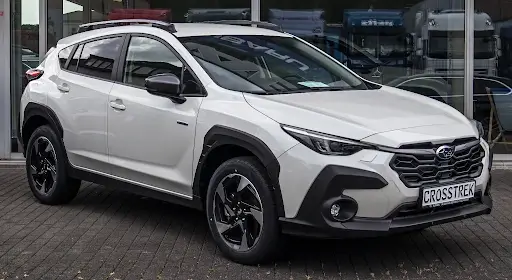
The Subaru Crosstrek is a strong choice for drivers who want crossover practicality without moving into a large SUV. The 2026 Crosstrek is 176.4 inches long and offers 8.7 inches of ground clearance on most trims. That gives it a relatively manageable footprint while maintaining the elevated driving position and utility that many American buyers prefer.
Its size also makes it easier to consider spaces that may feel too restrictive in a larger crossover. For drivers who deal with winter weather, rough pavement, and occasional trips outside the city, the Crosstrek offers a useful balance between urban maneuverability and everyday versatility.
Volvo EX30
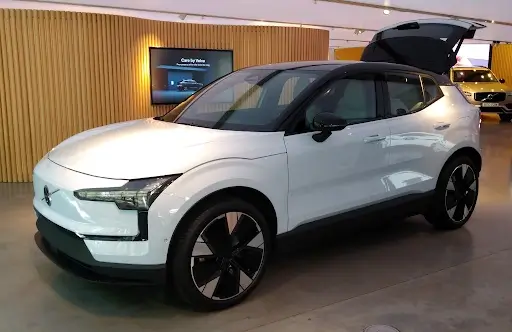
The Volvo EX30 demonstrates why vehicle dimensions matter when evaluating electric vehicles for city use. The compact EV measures 166.7 inches in length, making it significantly shorter than many electric crossovers. Its compact footprint is particularly relevant to drivers who regularly deal with tight street parking. For an urban EV, a small exterior footprint can be more meaningful in daily life than simply having a large battery or abundant interior space.
MINI Cooper
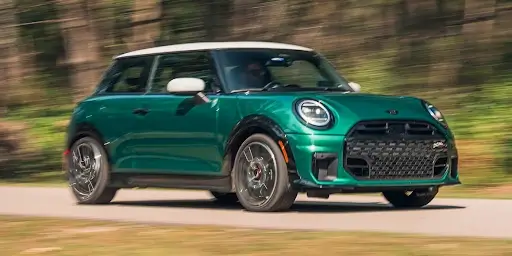
The MINI Cooper remains a natural candidate for drivers who prioritize maneuverability. Its hatchback format and compact proportions make it well suited to dense urban environments. A smaller vehicle can also be easier to judge when entering a narrow parking space because the driver has less bodywork to position.
Hyundai IONIQ 5
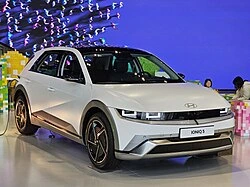
The Hyundai IONIQ 5 is an interesting reminder that an EV is not automatically a small city car. Despite its crossover styling and modern technology, the IONIQ 5 is 185.6 inches long. That places it in a very different category from something like the Volvo EX30.
What to Look for When Comparing Cars for NYC
| Feature | Why It Matters for NYC Drivers |
| Compact length and width | Makes tight parking spaces and narrow streets easier to manage |
| Tight turning circle | Reduces the number of corrections during parking |
| 360-degree camera | Provides a clearer view of the vehicle’s surroundings |
| Front and rear sensors | Helps detect nearby obstacles |
| Rear cross-traffic alert | Improves awareness when reversing |
| Parking assist | Reduces steering workload during parallel parking |
| Power-folding mirrors | Reduces exposure to passing traffic when parked |
| Taller tire sidewalls | Provides a more practical setup for rough pavement |
| Good outward visibility | Helps drivers judge vehicle corners and surrounding traffic |
Frequently Asked Questions
What are the best car features for NYC parking?
The most useful car features for NYC parking include a 360-degree camera, front and rear parking sensors, rear cross-traffic alert, automated parking assistance, power-folding mirrors, strong outward visibility and a tight turning circle. Compact exterior dimensions are equally important for navigating crowded streets.
What are the best cars for NYC parking in 2026?
Some of the best cars for NYC parking include compact models such as the Subaru Crosstrek, Volvo EX30, and MINI Cooper. The right choice depends on your parking environment, desired cargo space, vehicle dimensions, visibility, and available driver-assistance technology.
Is a smaller car better for New York City driving?
A smaller car can make New York City driving and parking easier because it generally requires less space to maneuver and can fit into tighter parking spaces. However, dimensions should be considered alongside turning ability, visibility, cameras, parking sensors, tire configuration and safety technology.
Final Thoughts
New York City parking may never become effortless, but choosing the right vehicle can make the experience significantly less stressful. For city drivers, the smartest car is not necessarily the largest, most powerful, or most technologically loaded model. Instead, look for a vehicle that combines compact dimensions, excellent visibility, a tight turning radius, useful parking technology, durable tires, and practical driver-assistance features.
For more parking hacks, car-buying advice, driving tips, and the latest automotive insights, just have a look at Mr. Leecar Experts for U.S.-based car trends, car news, and new vehicle launches.
