

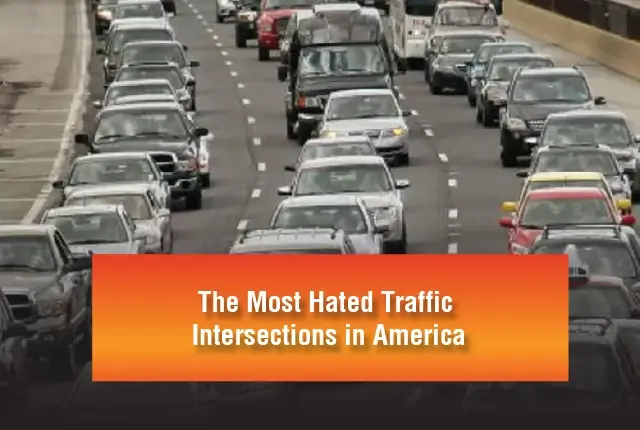
For millions of commuters across the United States, these intersections are an unavoidable part of daily life. Yet while most people think of them as frustrating traffic bottlenecks, a growing number have earned a far more troubling distinction. According to traffic safety studies, state crash reports, and transportation agency data, some intersections are not merely inconvenient, and they rank among the most dangerous places a driver can encounter on America’s road network.
Transportation experts often describe these locations as conflict places where roadway design and human behavior collide. When those conflicts occur at speeds exceeding 45 miles per hour, the results can be catastrophic. Side-impact collisions remain among the deadliest types of crashes because the side of a vehicle offers significantly less protection than the front or rear structure.
With traffic volumes reaching new highs in 2026, transportation officials are increasingly focusing on intersections that continue to generate disproportionate numbers of serious injuries and fatal crashes. Some have become infamous among residents, while others remain largely unknown outside their communities despite producing alarming crash statistics year after year.
Why Certain Intersections Become Crash Magnets
Most drivers naturally blame reckless motorists whenever they hear about a serious intersection collision. While driver behavior certainly plays a role, transportation engineers often point to something less obviously the infrastructure design.
The most dangerous intersections rarely become hazardous overnight. Instead, they evolve over the years as population growth, commercial development, and vehicle traffic steadily increase. Many of today’s high-risk intersections share a common pattern. They combine heavy traffic volumes, multiple turning movements, poor sightlines, complex signal timing, and speed limits that leave little room for error.
A significant contributor to intersection risk is the emergence of the stroad, a road design that attempts to function as both a neighborhood street and a high-capacity traffic corridor at the same time. It moves traffic quickly while also serving shopping centers, schools, restaurants, gas stations, and residential neighborhoods.
This creates a dangerous environment where drivers may be traveling at highway-like speeds while simultaneously encountering pedestrians, cyclists, delivery vehicles, and cars entering from dozens of driveways. The result is a constant stream of potential conflict points.
As congestion increases, human behavior often makes matters worse. Frustrated commuters become more likely to run yellow lights, weave through traffic, follow too closely, or make risky lane changes. On some of the most congested roads in America, impatience can become just as dangerous as poor infrastructure.
The 2026 Hall of Shame: America's Most Dangerous Intersections
Across the country, some intersections have earned a notorious reputation—not simply because they’re busy, but because they repeatedly combine heavy traffic with a troubling number of serious crashes.
Iliff Avenue and Tower Road, Colorado
When people imagine dangerous intersections, they often picture downtown Los Angeles or Manhattan. Surprisingly, some of the most fatal intersections America 2026 data highlights are located in suburban communities.
The intersection of Iliff Avenue and Tower Road has become notorious among local commuters due to its combination of high traffic speeds, multiple travel lanes, commercial activity, and heavy turning movements. When morning and evening rush hours hit, the intersection transforms into a constant stream of vehicles, where a single moment of hesitation or misjudgment can quickly escalate into a crash.
What makes this location particularly concerning is the severity of many collisions. Because vehicles frequently travel at higher speeds than those found in dense urban centers, crashes often involve significant impact forces.
Harbor Boulevard and Katella Avenue, California
Southern California is no stranger to traffic congestion, but danger often increases once drivers leave the freeways and enter busy commercial corridors.
Few intersections illustrate this challenge better than Harbor Boulevard and Katella Avenue in Anaheim. Located near one of the region’s busiest tourism zones, the intersection experiences a unique mix of road users. Local commuters share the roadway with tourists, rental car drivers, ride-share vehicles, delivery trucks, pedestrians, and cyclists. Many visitors are unfamiliar with local traffic patterns, increasing the likelihood of sudden braking, missed turns, and unexpected lane changes.
The combination of congestion, pedestrian activity, and driver unfamiliarity creates one of the most volatile traffic environments in Southern California.
I-70 Eastbound and North Peoria Street, Denver, Colorado
Denver’s rapid growth has placed significant pressure on transportation infrastructure throughout the metro area.
Among the most problematic locations is the I-70 Eastbound interchange at North Peoria Street. Unlike traditional intersections, this area combines interstate traffic, freight vehicles, merging traffic, and high-speed travel into a single high-risk environment.
Heavy truck traffic further complicates matters. Larger vehicles require longer stopping distances and create visibility challenges for nearby drivers. During rush hour, the interaction between passenger vehicles and commercial trucks can produce dangerous merging conflicts that contribute to serious crashes.
Why Suburban America Is Becoming More Dangerous
One of the most surprising findings from recent traffic safety studies is that many of the deadliest road intersections in US communities are no longer located in downtown areas. Instead, danger is increasingly shifting toward rapidly expanding suburbs.
Population growth and economic expansion have fueled a dramatic increase in traffic across suburban regions of Colorado, Texas, Florida, Arizona, and North Carolina over the past decade. New housing developments, retail centers, distribution warehouses, and office parks have dramatically increased traffic volumes on roads originally designed for far fewer vehicles.
Infrastructure improvements often struggle to keep pace with this growth. While roads may be widened to accommodate additional traffic, critical safety upgrades such as protected turn lanes, improved signal timing, and pedestrian infrastructure are frequently delayed.
At the same time, e-commerce has transformed local traffic patterns. Delivery vans, freight vehicles, and commercial trucks now operate throughout the day on roads once dominated primarily by commuters. This creates additional challenges at already overloaded intersections.
The Hidden Cost of Dangerous Intersections
The consequences of dangerous intersections extend far beyond accident statistics. Every serious crash affects families, businesses, emergency services, insurance providers, and local economies.
| Impact Area | Consequence |
|---|---|
| Healthcare Costs | Increased medical expenses and long-term rehabilitation |
| Insurance Premiums | Higher rates for local drivers |
| Traffic Delays | Lost productivity and longer commute times |
| Emergency Response | Greater demand on police, fire, and medical resources |
| Vehicle Damage | Billions of dollars in repair and replacement costs |
How Drivers Can Protect Themselves
Although drivers cannot redesign intersections, they can significantly reduce their risk through defensive driving. One of the most effective habits is resisting the urge to accelerate the instant a traffic light turns green. Waiting just a couple of seconds allows red-light runners to clear the intersection before you proceed.
Maintaining a wider following distance also provides more reaction time when traffic suddenly stops. This becomes especially important near large intersections where unexpected braking is common. Drivers should also avoid aggressive lane changes when approaching major junctions. Missing a turn may be frustrating, but attempting a last-second maneuver often creates a much greater risk.
Most importantly, eliminate distractions. Intersections demand complete attention. A brief glance at a phone can be enough to miss a changing signal, a pedestrian entering a crosswalk, or a vehicle running a red light.
Final Thoughts
America’s most dangerous intersections are more than just frustrating traffic bottlenecks. They are reminders that infrastructure, technology, and human behavior must work together to keep roads safe.
As cities continue growing and traffic volumes rise, improving these intersections will remain one of the most important transportation challenges facing the country. While engineers and policymakers work toward long-term solutions, drivers still play the most important role in preventing crashes. Awareness, patience, and defensive driving remain the best tools for navigating today’s high-risk roadways. The next time you approach a busy intersection, remember that arriving safely is always more important than arriving a few seconds sooner.
Frequently Asked Questions
What are the most dangerous intersections in America in 2026?
Some of the most dangerous intersections in America include locations in Colorado, California, Florida, and Texas where high traffic volumes, complex turning movements, and high-speed travel create elevated crash risks.
Why are suburban intersections becoming more dangerous?
Rapid population growth, larger vehicles, increased delivery traffic, and infrastructure that hasn’t kept pace with development are making many suburban intersections more hazardous than traditional urban crossroads.
How can drivers stay safe at the worst traffic intersections USA commuters face daily?
Drivers should avoid distractions, maintain safe following distances, wait briefly after green lights, watch for red-light runners, and practice defensive driving techniques when navigating high-risk intersections.
For more commuter hacks, defensive driving tips, vehicle ownership advice, and breaking automotive updates, just have a look at Mr.Leecar, your trusted destination for US car trends, automotive news, and the latest vehicle launches. Stay informed, drive smart, and make every mile a safer one.

