

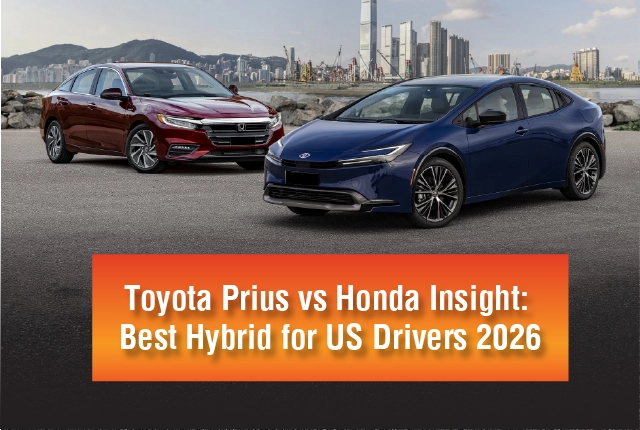
For more than two decades, the hybrid conversation in America has revolved around two pioneering nameplates, the Toyota Prius and the Honda Insight. These vehicles didn’t just introduce fuel efficiency to the mainstream. They reshaped how US drivers think about daily commuting. In 2026, however, the comparison is no longer as straightforward as it once was.
The modern American driver expects more than just fuel savings. Today’s hybrid buyer is looking for a vehicle that blends efficiency with performance, design, and technology, something equally comfortable navigating Los Angeles traffic, tackling Northeast winters, or cruising long interstate highways. This shift in expectations has pushed automakers to rethink their hybrid strategies entirely.
Toyota has doubled down on the Prius, refining it into a specialized, high-efficiency machine with surprising performance credentials. Honda, on the other hand, has moved away from positioning the Insight as a standalone flagship hybrid, instead integrating its hybrid technology into a broader lineup, including models like the Honda Civic Hybrid and Honda Accord Hybrid.
A Tale of Two Strategies in 2026
The contrast between Toyota and Honda is not simply about two cars, and it reflects two fundamentally different philosophies.
Toyota continues to treat the Prius as a dedicated hybrid platform, optimizing every aspect of the vehicle around fuel efficiency and aerodynamic performance. The result is a car that feels purpose-built, engineered from the ground up to extract maximum value from every drop of fuel. This specialization gives the Prius a clear identity in a crowded market.
Honda’s strategy is more subtle but equally significant. Rather than concentrating its efforts on a single model, Honda has embedded hybrid technology across its most popular sedans. The spirit of the Insight lives on, but in a form that prioritizes familiarity and accessibility. For many US drivers, this approach reduces the learning curve associated with hybrid ownership.
This divergence means buyers are no longer choosing between two similar vehicles and they are choosing between two distinct interpretations of what a hybrid should be.
Fuel Efficiency: Where the Prius Still Leads
Fuel economy remains a decisive factor for American buyers, particularly in an environment of fluctuating gas prices and long commuting distances. In this regard, the Prius continues to set the benchmark.
The 2026 Prius delivers up to 57 MPG in its most efficient configuration, with all-wheel-drive variants maintaining impressive numbers in the mid-50s. This level of efficiency is particularly valuable in urban environments, where stop-and-go traffic allows the hybrid system to operate at peak effectiveness.
Honda’s hybrid systems, as seen in its Civic and Accord models, typically achieve between 48 and 50 MPG combined. While these figures are still highly competitive, they reflect a balance between efficiency and a more traditional driving experience.
For a typical American driver covering around 15,000 miles annually, the difference becomes meaningful over time. The Prius can reduce fuel consumption enough to generate noticeable savings, particularly for those navigating congested metropolitan areas such as Los Angeles, Chicago, or New York City. Over several years of ownership, this efficiency advantage translates into tangible cost benefits.
Pricing and Value: A Strategic Gap
Price remains a critical consideration for US households, and the gap between these vehicles is relatively narrow but strategically important.
The Prius enters the market at a slightly higher starting price, generally just under $30,000, while Honda’s hybrid sedans begin closer to the $28,000 range. At first glance, this difference may appear modest, but it reflects deeper distinctions in equipment and capability.
Toyota justifies its pricing with a more powerful standard hybrid system, producing nearly 200 horsepower, along with features such as available all-wheel drive. This AWD capability is particularly relevant for drivers in regions with harsh winters or frequent rainfall, including the Northeast and Pacific Northwest. In such conditions, the added traction can significantly enhance safety and confidence.
Honda’s value proposition lies in its simplicity. Its hybrids offer a lower entry point and a driving experience that closely mirrors that of a conventional gasoline vehicle. For buyers who prioritize ease of use and a familiar feel, this approach can be highly appealing.
Ultimately, the pricing comparison is less about affordability and more about what each dollar delivers in terms of features, capability, and long-term value.
Performance and Driving Experience
One of the most notable changes in the 2026 Prius is its transformation from a purely efficiency-focused vehicle into one that also delivers respectable performance. With a 0–60 mph time of approximately seven seconds, it is no longer perceived as underpowered. This improvement makes a meaningful difference when merging onto high-speed highways or overtaking slower traffic.
The Prius also benefits from a lower, more aerodynamic design, which contributes to improved handling and a more engaging driving experience. It feels composed and responsive, particularly compared to earlier generations.
Honda’s hybrids take a different approach. Their performance is tuned to feel natural and predictable, emphasizing smooth acceleration and consistent braking. The regenerative braking system, often a point of adjustment for new hybrid drivers, is calibrated in a way that minimizes disruption. This makes Honda’s hybrids especially appealing to those transitioning from traditional internal combustion vehicles.
For US drivers, the choice here depends largely on preference. Those seeking a more dynamic and modern driving experience may gravitate toward the Prius, while those who value familiarity and comfort may prefer Honda’s execution.
Technology and Interior Experience
Technology has become a defining element of the modern hybrid, and both manufacturers have made significant investments in this area.
The Prius embraces a forward-looking approach, featuring a large digital interface, advanced connectivity options, and available features such as a solar roof that can supplement battery charging. Its interior design reflects a broader trend toward minimalism and digital integration, appealing to tech-savvy buyers.
Honda’s interiors, by contrast, emphasize clarity and usability. Controls are intuitively placed, and the layout avoids overwhelming the driver with complexity. While it may not feel as futuristic as the Prius, it excels in day-to-day practicality.
This difference highlights a broader theme: Toyota is designing for the future, while Honda is refining the present.
Design: From Subtle to Striking
Design has become an increasingly important factor in the hybrid segment, particularly as buyers seek vehicles that reflect their personal style.
The Prius has undergone a dramatic visual transformation. Its sleek, coupe-like silhouette and aggressive lines position it as a standout option, particularly in design-conscious markets such as California and Florida. It is no longer a car chosen solely for efficiency, and it is also chosen for its appearance.
Honda’s hybrid sedans maintain a more conservative aesthetic. Their clean lines and understated design appeal to buyers who prefer a timeless look that will age gracefully. This contrast reinforces the broader divide between the two brands: one prioritizes bold innovation, while the other focuses on enduring practicality.
| Feature | Toyota Prius | Honda Insight / Honda Hybrid |
|---|---|---|
| Starting Price (US) | ~$29,745 | ~$28,500 |
| Fuel Economy | Up to 57 MPG | ~48 – 50 MPG |
| Drivetrain | FWD / AWD-e | FWD |
| Power | 194 hp | ~180 – 200 hp |
| Best For | Efficiency & tech | Comfort & familiarity |
Which Hybrid Is Right for You?
Determining the best hybrid car for US drivers in 2026 ultimately depends on how the vehicle will be used. The Prius emerges as the stronger choice for drivers who prioritize maximum fuel efficiency, advanced technology, and the added versatility of all-wheel drive. It represents the cutting edge of hybrid engineering and offers a glimpse into the future of efficient mobility.
Honda’s hybrid lineup, carrying forward the legacy of the Insight, is better suited to drivers who value a familiar and comfortable experience. It delivers excellent efficiency without requiring significant adjustments in driving habits, making it an ideal choice for those seeking a seamless transition from traditional vehicles.
Both approaches are valid, and both deliver strong value. The decision comes down to whether you prefer innovation or familiarity.
Frequently Asked Questions
What is the best hybrid car for US drivers in 2026 with AWD?
The Toyota Prius stands out due to its available AWD-e system, which provides improved traction in challenging weather conditions without significantly impacting fuel efficiency.
Is there a big difference in Toyota Prius MPG vs Honda Insight?
Yes, the Prius typically delivers higher MPG, and over time, this can result in meaningful fuel savings, particularly for drivers with long or urban commutes.
How does the Honda Insight price vs the Toyota Prius 2026 compare?
Honda hybrids generally have a slightly lower starting price, while the Prius offers additional features and capabilities that may justify its higher cost.
Final Thoughts
For US buyers navigating the evolving hybrid market, the key is to look beyond surface-level comparisons and consider how each vehicle aligns with real-world driving needs. Evaluate your commute, climate, and priorities carefully before making a decision. Stay informed and ahead of the curve. Have a look at Mr.Leecar experts for US-based car trends, car news, and launches.


