For decades, Houston’s identity has been inseparable from oil, gas, and sprawling highways. Mention the city to most Americans, and images of pickup trucks, refineries, and endless stretches of interstate roads immediately come to mind. As the Energy Capital of the World, Houston has long played a central role in powering the nation through traditional energy sources. But a major shift is underway.
Across Houston’s neighborhoods, business districts, and transportation corridors, electric vehicles are becoming an increasingly common sight. Charging stations are appearing in shopping centers, airports, office complexes, and highway rest stops. Local commuters are discovering that electric vehicles offer significant savings on fuel and maintenance. Businesses are investing in electrified fleets, and major infrastructure projects are positioning the city as a critical hub in America’s transportation future.
What makes this transformation especially remarkable is that it is happening in a city many once assumed would be among the last to embrace vehicle electrification. Today, Houston electric vehicle adoption is accelerating at a pace that is turning heads across the automotive industry. From massive investments in Houston EV charging infrastructure to growing demand for electric trucks and SUVs, the city is proving that EV growth is not limited to coastal tech hubs.
Here are five surprising reasons why Houston is rapidly emerging as one of the best cities for electric vehicles in the USA.
1. Houston Is Redefining What It Means to Be an Energy Capital
Many people assume the transition to electric transportation is in direct opposition to Houston’s traditional energy industry. The reality is far more interesting. Houston is not abandoning its energy leadership position. Instead, it is expanding it.
Major energy companies, utilities, and infrastructure providers throughout the region are investing heavily in renewable energy, grid modernization, battery storage, and EV charging networks. Rather than resisting the shift toward electric mobility, many industry leaders recognize that transportation electrification represents a significant business opportunity.
This unique advantage sets Houston apart from many other cities. Few metropolitan areas possess the same level of energy expertise, engineering talent, and infrastructure development capabilities.
2. Houston's Charging Infrastructure Is Expanding at an Incredible Pace
One of the biggest concerns for potential EV buyers remains range anxiety. Drivers need the assurance that reliable charging options are readily available whenever they are on the road. Houston is addressing this concern aggressively.
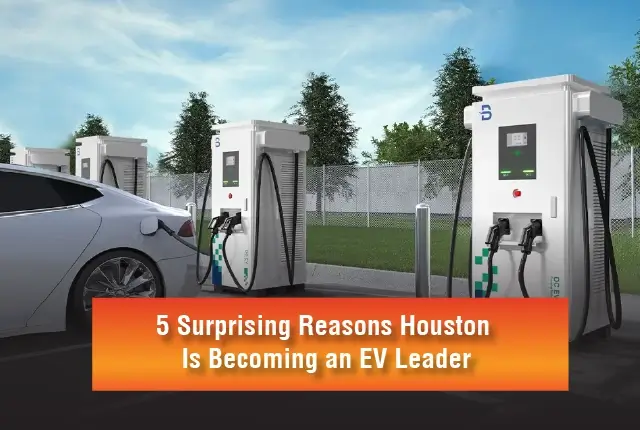
The growth of Houston’s EV charging infrastructure has accelerated dramatically over the past few years, creating a more connected and accessible charging ecosystem across the metropolitan area. Fast-charging hubs are being installed near airports, retail centers, major employment districts, and high-traffic highway corridors. These locations allow drivers to recharge quickly while shopping, working, or traveling.
The impact is significant. What was once considered a challenge for EV ownership is becoming increasingly convenient. Drivers no longer need to carefully map every trip around charging availability. Instead, charging is becoming integrated into daily routines. This infrastructure growth is particularly important in Houston because of the city’s size. With more than 600 square miles of land area and millions of residents spread across suburban communities, charging accessibility is essential for widespread adoption.
As charging networks continue to expand, Houston is removing one of the final barriers preventing many consumers from switching to electric vehicles.
3. Commercial Transportation Is Accelerating the EV Revolution
Houston’s importance extends far beyond passenger vehicles. The city serves as one of North America’s largest logistics, shipping, energy, and freight transportation hubs.
Every day, thousands of commercial vehicles move goods throughout the region and across the country. Heavy-duty electric trucks, fleet vehicles, and logistics operations are increasingly becoming part of long-term transportation strategies. As commercial charging becomes more accessible, businesses are finding it easier to adopt electric fleets and benefit from lower operating costs.
The development of high-capacity charging corridors between major Texas cities is particularly significant. These routes are helping create the foundation for electric freight transportation across the state. When commercial transportation embraces electrification, consumer confidence often follows. Drivers see businesses investing in electric technology and gain greater confidence in its reliability, practicality, and long-term viability. Houston’s industrial economy may ultimately become one of the strongest drivers of Houston electric vehicle adoption.
4. Modern Electric SUVs and Trucks Fit the Texas Lifestyle
Several years ago, many consumers viewed electric vehicles as small commuter cars designed primarily for urban environments. That perception is changing rapidly. Today’s EV market includes a growing selection of electric pickup trucks, large SUVs, family crossovers, and performance vehicles capable of meeting the demands of Texas drivers. This shift aligns perfectly with current Houston EV market trends.
Houston residents often prioritize vehicle size, versatility, cargo capacity, and long-distance capability. To meet changing consumer preferences, manufacturers are launching EVs that combine practicality and power in a single package. Meanwhile, advancements in battery technology are making electric vehicles more capable than ever before. Many modern EVs now deliver well over 300 miles of range under real-world conditions. This increased capability makes electric vehicles far more practical for suburban commuters and families who regularly travel across the Houston metropolitan area.
The used EV market is also becoming increasingly attractive. As inventory expands and prices stabilize, consumers have access to a broader range of affordable options. Buyers who previously considered EVs out of reach are now finding compelling opportunities in both new and pre-owned markets. With better options, longer-lasting batteries, and more competitive pricing, EVs are becoming an attractive choice for a broader range of consumers.
5. Houston's Long Commutes Make EV Ownership Financially Attractive
Houston is famous for many things, but short commutes are not one of them. Many residents travel significant distances every day between suburban communities and employment centers.
For traditional gasoline vehicles, those miles add up quickly. Between gas prices, regular servicing, and repair bills, owning a traditional vehicle can be expensive. Electric vehicles provide a more economical alternative for many drivers. EVs generally require less routine maintenance because they have fewer moving parts than internal combustion vehicles. Owners also benefit from lower fueling costs when charging at home or using cost-effective public charging options.
Regenerative braking technology adds another benefit. Instead of wasting energy during stop-and-go traffic, EVs capture and reuse it, improving efficiency in conditions common throughout Houston. For many households, switching to an EV is no longer simply an environmental decision. It is becoming a smart financial decision.
| Benefit | Traditional Gas Vehicle | Electric Vehicle |
|---|---|---|
| Fueling Costs | Subject to fluctuating gas prices | Generally, lower charging costs |
| Maintenance Requirements | Oil changes, engine servicing, exhaust repairs | Fewer moving parts and lower routine maintenance |
| Stop-and-Go Traffic Efficiency | Lower fuel efficiency in congestion | Regenerative braking improves efficiency |
| Long-Term Operating Costs | Higher due to fuel and maintenance | Typically lower over time |
| Environmental Impact | Tailpipe emissions | Zero tailpipe emissions |
Final Thoughts: Why Houston Could Become a National EV Leader
Several factors make Houston’s growth particularly noteworthy. Unlike some cities where EV adoption is driven primarily by environmental policy, Houston’s momentum is rooted in practicality. Residents appreciate lower operating costs. Businesses recognize opportunities for fleet efficiency. Energy companies see long-term infrastructure potential. And consumers now have access to vehicles that match their lifestyles.
This combination creates a powerful ecosystem for sustained growth. As charging networks expand, vehicle technology improves, and ownership costs remain competitive, Houston’s position among the best cities for electric vehicles in the USA is likely to strengthen even further. The city is proving that electric mobility can thrive in regions traditionally associated with fossil fuels. In many ways, Houston may become one of the most important EV success stories in America.
Frequently Asked Questions
Is Houston's EV charging infrastructure sufficient for daily commuting?
Yes. Houston’s EV charging infrastructure has expanded rapidly, with charging stations located near retail centers, airports, workplaces, and major highway corridors. Most commuters can easily find convenient charging options throughout the metro area.
What do current Houston EV market trends indicate?
Houston EV market trends show growing demand for electric SUVs, trucks, and long-range vehicles. Improved battery technology, increased charging availability, and a stronger used EV market are helping drive adoption.
Why is Houston considered one of the best cities for electric vehicles USA?
Houston combines extensive infrastructure investment, strong energy-sector support, affordable operating costs, and growing consumer demand. These factors make it one of the fastest-growing EV markets in the United States.
For more US automotive insights, EV ownership tips, industry developments, car launches, and breaking automotive news, Have a look at Mr.Leecar, your trusted source for US-based car trends, vehicle technology updates, and future mobility developments.