

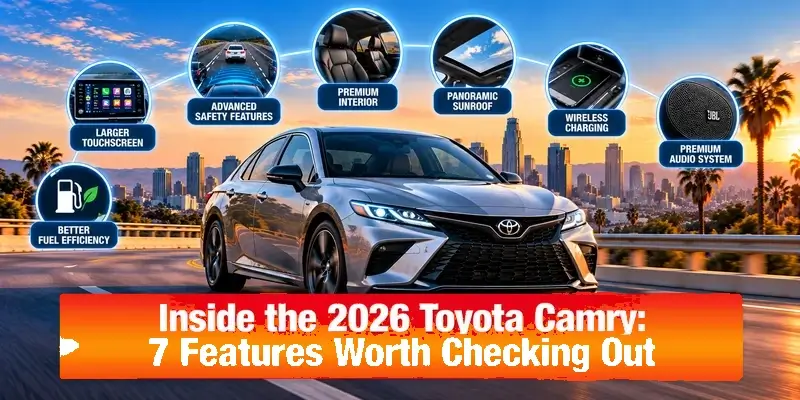
The 2026 Toyota Camry may look familiar from the outside, but spend a few minutes inside and it becomes clear why Toyota continues to give its midsize sedan serious attention.
The latest Camry combines a hybrid-only powertrain lineup with a cabin designed around everyday technology, driver visibility, passenger comfort, and long-distance usability. For U.S. drivers dealing with everything from stop-and-go commutes in Los Angeles to long interstate trips through Texas, those details can matter more than flashy styling.
“A good cabin is not just about how much technology it has. It is about how naturally that technology fits into an everyday drive”.
Here are seven Toyota Camry features worth knowing before you take one for a test drive.
1. A More Digital Driver-Focused Dashboard
The 2026 Camry takes a more tech-forward approach to its cockpit, offering a 7-inch digital gauge cluster on some trims and a larger 12.3-inch display on others. The larger display is available on the XLE and XSE, while lower trims use the smaller cluster. Toyota’s U.S. specifications describe selectable displays for information such as fuel economy, driver-assistance information, vehicle data, and warning messages.
The larger cluster can make the driver’s information easier to organize at a glance, particularly when you are switching between navigation, vehicle information, and hybrid-system data. For someone commuting through a busy city or spending hours on an interstate, having the information directly in front of the driver can reduce the need to repeatedly look toward the center screen.
2. The 12.3-Inch Infotainment Screen Is Not Limited to the Top Trim
The infotainment system is another area where trim selection makes a noticeable difference.
The 2026 Toyota Camry comes with an 8-inch Toyota Audio Multimedia touchscreen on the LE, SE, and Nightshade. A 12.3-inch version is standard on the XLE and XSE and available on certain lower trims. Wireless Apple CarPlay and wireless Android Auto are standard across the lineup, giving drivers an easy way to bring compatible smartphone navigation, calls, messages, and media into the vehicle. This is particularly useful for U.S. drivers who rely on familiar phone-based navigation rather than learning a separate interface every time they change vehicles.
The larger screen also creates a more upscale visual impression, but the real advantage is usability. A larger map, easier-to-read information, and clearer on-screen controls can make a difference when you’re navigating unfamiliar streets or managing a long road trip. Toyota also offers a 9-speaker JBL premium audio system on upper trims, giving buyers another reason to consider the XLE or XSE if cabin entertainment is a priority.
3. Wireless Charging Keeps the Center Console Cleaner
The modern driver’s phone has become almost as important as the vehicle’s own infotainment system. Toyota addresses that reality with a standard Qi-compatible wireless smartphone charging pad. Instead of keeping a charging cable connected every time you get behind the wheel, a compatible phone can be placed on the charging surface.
It sounds like a small feature, but it can become one of the most frequently used pieces of technology in the cabin. Think about a typical weekday: your phone is running navigation, handling calls, streaming music, and receiving messages while you commute. Having wireless charging available can reduce cable clutter while keeping the device ready for the next stop. The Camry also provides USB connectivity, so passengers can still charge devices when wireless charging is not an option.
4. Comfort Features Make the Camry More Road-Trip Friendly
The Toyota Camry comfort features are designed around the type of driving for which midsize sedans have traditionally been known: commuting, family transportation, and highway travel. Depending on trim, the Camry offers power-adjustable front seating, heated front seats, and available heated and ventilated front seats. Upper trims can also add leather-trimmed or leather-and-microfiber-trimmed seating, while other versions use fabric or SofTex materials.
An LE aimed at maximizing value will not provide the same cabin experience as an XLE equipped with additional comfort features. For drivers in states such as Arizona, Nevada, Florida, or Texas, ventilated front seats can be particularly useful during hot-weather driving. In colder regions such as Minnesota or Michigan, heated seats and a heated steering wheel can be more relevant during winter commuting.
5. Toyota Safety Sense 3.0 Comes Standard
Technology inside the Camry is not limited to entertainment. Every 2026 Camry is equipped with Toyota Safety Sense 3.0, Toyota’s suite of driver-assistance technologies. The system includes features such as Pre-Collision System with Pedestrian Detection, Dynamic Radar Cruise Control, Lane Departure Alert, Automatic High Beams, Road Sign Assist, and Lane Tracing Assist.
These systems serve different purposes.
Pre-Collision System with Pedestrian Detection can provide warnings and, under certain conditions, automatic braking when a potential collision is detected.
Dynamic Radar Cruise Control is designed to maintain a preset speed and following distance from traffic ahead.
Lane Tracing Assist can help keep the Camry centered when the system is active and suitable lane markings or a preceding vehicle are detected.
For commuters who regularly face heavy freeway traffic, that distinction is worth understanding before purchasing.
6. The Available 10-Inch Head-Up Display Puts Key Information in View
Toyota offers a 10-inch color Head-Up Display on higher trims. The system can project information such as speed, shift position, compass information, TSS 3.0 indicators, audio, phone information, and hybrid-system information into the driver’s forward field of view.
The advantage is straightforward: drivers can access selected information without repeatedly looking down at the instrument cluster. This can be especially useful on unfamiliar roads where navigation and speed information need to be checked frequently. It is also one of those features that is easier to appreciate during an actual test drive than by looking at a specification sheet.
If you’re comparing Camry trims, the HUD is worth testing in person rather than assuming it comes standard across the lineup.
7. The Cabin Is Designed Around Everyday Practicality
Luxury-like screens tend to get attention, but some of the most useful Toyota Camry interior features are the less dramatic ones.
The Camry also remains a five-passenger sedan with useful passenger space for everyday family duties. Toyota lists 38.0 inches of rear legroom, giving the second row enough room for typical commuting and family use without turning the sedan into an oversized vehicle. It is the combination of usable rear space, accessible controls, smartphone connectivity, storage, climate functions, and available premium equipment that makes the cabin practical for daily U.S. driving.
What to Check During a 2026 Toyota Camry Test Drive
When checking out a 2026 Toyota Camry interior, spend a few minutes testing the features you are most likely to use every day.
Try the driver’s seat adjustment before evaluating the rear seating. Pair your smartphone with Apple CarPlay or Android Auto. Check whether the 8-inch or 12.3-inch screen feels easy to read from your normal driving position. If you’re considering an XLE or XSE, test the digital gauge cluster and available HUD.
Also check the rear seat if the car will be used as a family vehicle. Bring the child seats, bags, or other equipment you regularly carry if possible.
And don’t assume that every Camry on a dealer lot has the same equipment. Toyota’s specifications clearly distinguish between standard, available, and unavailable features by trim, so the exact vehicle’s window sticker matters.
Frequently Asked Questions
What are the key 2026 Toyota Camry interior features?
Key 2026 Toyota Camry interior features include available 12.3-inch digital displays, Toyota Audio Multimedia, wireless Apple CarPlay and Android Auto, wireless smartphone charging, heated and ventilated front seats, available JBL audio, and a 10-inch Head-Up Display. Equipment varies by trim.
Does the 2026 Toyota Camry have Toyota Safety Sense 3.0?
Yes. Toyota Safety Sense 3.0 is standard across the 2026 Camry lineup. It includes technologies such as Pre-Collision System with Pedestrian Detection, Dynamic Radar Cruise Control, Lane Departure Alert, Automatic High Beams, Road Sign Assist, and Lane Tracing Assist.
Does the 2026 Toyota Camry offer a Head-Up Display?
Yes. A 10-inch color Head-Up Display is available on higher Camry trims. It can show information including speed, compass data, TSS 3.0 indicators, audio and phone information, and hybrid-system information.
Final Takeaway
The 2026 Toyota Camry interior is less about one dramatic feature and more about how several practical technologies work together. The available 12.3-inch displays, wireless smartphone integration, comfort upgrades, driver-assistance systems, and Head-Up Display give the familiar midsize sedan a more contemporary cabin without abandoning its everyday usability. For U.S. shoppers, the smartest approach is to compare trims carefully rather than assuming every Camry has the same equipment. The difference between an LE, SE, Nightshade, XLE, and XSE can significantly change the cabin experience.
And if you’re dealing with a car problem or looking for practical driving hacks, maintenance advice, and buying tips, check out Mr. Leecar experts for U.S.-based car trends, automotive news, and new vehicle launches.


