

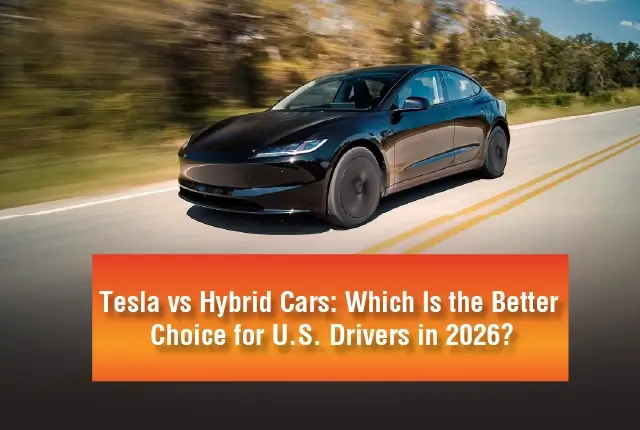
Buying a vehicle in America has become significantly more complicated than it was just a few years ago. Not long ago, the automotive industry seemed to have a clear direction. Electric vehicles were the future, federal tax credits helped offset higher purchase prices, and automakers were racing to electrify their lineups. Fast forward to 2026, and the equation has changed dramatically. Government incentives have shifted, EV competition has intensified, charging costs vary widely depending on location, and modern hybrids have become more efficient than ever before.
Today’s buyers must consider purchase prices, fuel savings, charging accessibility, insurance costs, depreciation, maintenance expenses, and long-term ownership value.
The Tesla vs hybrid cars debate in 2026 isn’t simply about gasoline versus electricity. It’s about finding the vehicle that best matches your lifestyle, driving habits, budget, and plans. Let’s dive into the numbers and explore which option delivers the best value for American drivers in 2026.
Why the Tesla vs Hybrid Debate Matters More Than Ever?
Electric vehicle sales continue to grow, but at a slower pace than many analysts predicted. At the same time, hybrid sales are reaching record levels as consumers seek fuel-efficient alternatives without changing their driving routines.
This trend is easy to understand. Many drivers appreciate the environmental benefits and lower operating costs of EVs, but concerns about charging infrastructure, battery longevity, and long-distance travel still influence purchasing decisions.
Meanwhile, modern hybrids offer an appealing middle ground. They deliver impressive fuel economy, require no charging, and provide the convenience of traditional gasoline vehicles.
In many ways, hybrids have become the safe choice for buyers who want better efficiency without dramatically changing their lifestyle. That makes the Tesla vs hybrid comparison more relevant than ever before.
Upfront Costs: The First Major Difference
The first thing most buyers notice is the purchase price. While Tesla has adjusted pricing aggressively over the last few years to remain competitive, electric vehicles generally still cost more upfront than comparable hybrid models. The difference may not seem enormous on paper, but when financed over five or six years, it can significantly impact monthly payments and total ownership costs.
| Vehicle Category | Average Starting Price (2026) |
|---|---|
| Tesla Model 3 | $40,000+ |
| Tesla Model Y | $45,000+ |
| Toyota RAV4 Hybrid | $33,000+ |
| Honda CR-V Hybrid | $35,000+ |
| Toyota Camry Hybrid | $30,000+ |
Tesla vs Hybrid Fuel Savings: Where the Real Battle Begins?
Fuel savings are often the biggest reason consumers consider both EVs and hybrids. At first, Tesla appears to have a clear advantage. Fast-charging rates have increased in many parts of the country, particularly in major urban areas where demand continues to rise. Drivers who regularly use commercial charging stations often discover that their actual energy expenses are much closer to gasoline costs than they initially expected.
This is where hybrids become surprisingly competitive.
A Toyota RAV4 Hybrid, Honda CR-V Hybrid, or Toyota Camry Hybrid can consistently deliver 40 to 50 MPG without ever requiring a charging cable. Regardless of whether you’re at home, at work, or traveling across the country, fuel efficiency remains virtually unchanged.
For homeowners with dedicated charging access, Tesla often wins the fuel-cost battle. For apartment residents and drivers who depend heavily on public chargers, the difference is much smaller than many buyers assume.
The Charging Factor Most Buyers Overlook
One of the most important questions in the Tesla vs hybrid debate has nothing to do with the vehicle itself. Instead, it comes down to where you live. Home charging remains one of the biggest advantages of EV ownership. Waking up every morning with a fully charged battery is incredibly convenient and often significantly cheaper than visiting a gas station.
But not every American has that luxury. Many apartment residents, condominium owners, and renters still face limited charging access. While charging infrastructure continues expanding throughout the country, relying entirely on public charging can become inconvenient and expensive.
EV vs Hybrid Ownership Costs Over Five Years
Electric vehicles generally require less routine maintenance because they have fewer moving parts. Tesla owners avoid oil changes, transmission servicing, spark plug replacements, and many of the mechanical maintenance items associated with internal combustion engines.
Regenerative braking also helps reduce brake wear, potentially lowering maintenance expenses over time. This gives Tesla a clear advantage in maintenance costs. However, the savings are partially offset elsewhere.
Insurance premiums for Tesla vehicles are often significantly higher than those for mainstream hybrids. Repair costs, specialized components, advanced sensors, and limited repair networks can increase insurance rates substantially.
Many buyers are surprised to discover that insurance can offset a significant portion of the fuel and maintenance savings they expected from EV ownership. Hybrids require routine maintenance, but they typically fall into more affordable insurance categories. Combined with their reputation for reliability, this often helps balance the overall ownership equation. When examining total EV vs hybrid ownership costs over five years, the numbers are frequently closer than expected.
Depreciation: The Hidden Cost That Matters
Depreciation remains one of the largest ownership expenses for any vehicle. While fuel and maintenance costs receive most of the attention, resale value often determines how much a vehicle truly costs over time.
Tesla vehicles have experienced greater depreciation volatility in recent years. Increasing EV competition, frequent pricing adjustments, and a growing supply of used electric vehicles have all contributed to fluctuations in resale values.
At the same time, demand for hybrids continues to remain exceptionally strong. Many consumers who aren’t ready to transition to a fully electric vehicle still want better fuel economy. As a result, used hybrids often command impressive resale values in today’s market.
For buyers who plan to sell or trade their vehicle within five years, depreciation should play a major role in the decision-making process. A vehicle that retains more value can often offset slightly higher operating expenses.
Which Vehicle Performs Better on Road Trips?
Long-distance travel remains one of the biggest differentiators between Teslas and hybrids. Tesla has built one of the most comprehensive charging networks in North America, making EV road trips easier than ever before. Route planning software automatically identifies charging stops, helping drivers travel confidently across long distances.
For many Tesla owners, road trips are no longer a concern. However, charging still requires additional planning and time. Even fast chargers add stops to your journey, and factors such as weather, charging availability, and battery performance can affect travel schedules.
A hybrid vehicle offers virtually the same convenience as a traditional gasoline-powered car. Drivers can refuel almost anywhere in a matter of minutes and continue their journey without worrying about charging availability.
Should You Buy a Tesla or a Hybrid in 2026?
The answer depends entirely on your personal circumstances.
Tesla makes tremendous sense for buyers who have reliable access to home charging and want to maximize fuel savings. Drivers who value advanced technology, software integration, instant torque, and reduced maintenance costs may find Tesla ownership highly rewarding.
Meanwhile, Hybrid remains one of the smartest choices for drivers seeking flexibility, lower insurance costs, strong resale value, and outstanding fuel economy without changing their daily habits. The best vehicle is the one that aligns with your budget, driving patterns, and long-term ownership goals.
For many Americans, the key question isn’t whether electric vehicles are better than hybrids. It’s whether their lifestyle allows them to fully benefit from electric vehicle ownership.
Final Thoughts
The Tesla vs hybrid cars debate in 2026 is closer than ever before. Tesla offers lower maintenance requirements, exceptional home-charging savings, and a technology-focused ownership experience that many drivers love. Hybrids provide remarkable fuel efficiency, lower upfront costs, excellent resale values, and unmatched convenience for long-distance travel.
If you can consistently charge at home and drive enough miles to maximize electricity savings, a Tesla may deliver the strongest long-term value. If you want a vehicle that combines efficiency, affordability, flexibility, and worry-free road trips, a hybrid remains one of the most practical automotive investments available today. The future may be electric, but in 2026, hybrids continue to prove why they remain one of the smartest choices for American drivers.
Frequently Asked Questions
Does a Tesla save more money than a hybrid in 2026?
Tesla vs hybrid fuel savings largely depend on charging access. Home charging can significantly reduce operating costs, while drivers relying on public charging may find a high-efficiency hybrid offers similar overall savings.
How do EV vs hybrid ownership costs compare over five years?
EV vs hybrid ownership costs are often surprisingly close. Teslas generally save money on maintenance and fuel, while hybrids benefit from lower insurance premiums and stronger resale values.
What is the best car for U.S. drivers in 2026?
The best car for U.S. drivers in 2026 depends on individual needs. Tesla is ideal for drivers with home charging access, while hybrids offer greater flexibility, easier road-trip capability, and lower ownership barriers.
Just have a look at Mr.Leecar Experts for the latest U.S. car trends, breaking automotive news, vehicle launches, ownership insights, and expert buying guides designed specifically for American drivers.


