

The midsize three-row SUV segment has become one of the most competitive categories in the American automotive market. Today’s buyers expect far more than spacious seating and a large cargo area, and they want advanced technology, premium interior materials, improved fuel efficiency, confident performance, and the versatility to handle everything from weekday commutes to cross-country road trips.
Today’s automotive market demands far more than a simple refresh of an existing model.
That’s why Volkswagen has taken a much bigger step with the 2027 Volkswagen Atlas. Rather than introducing another mid-cycle facelift, the company has unveiled an all-new second-generation Atlas that builds on nearly a decade of customer feedback while embracing the latest engineering and technology advancements.
Since its debut in 2018, the Atlas has become Volkswagen’s most successful SUV in the United States. Designed specifically with North American buyers in mind, it quickly established itself as a practical alternative to established rivals such as the Toyota Grand Highlander, Honda Pilot, Kia Telluride, Hyundai Palisade, Chevrolet Traverse, and Ford Explorer. Alongside the Atlas Cross Sport, the model now accounts for a significant portion of Volkswagen’s U.S. sales, proving that buyers continue to value its spacious cabin, composed driving dynamics, and family-friendly practicality.
In this blog, we’ll explore everything you need to know about the 2027 Volkswagen Atlas, including its updated performance, interior upgrades, design changes, pricing expectations, release timeline, and whether it’s worth waiting for over today’s leading three-row SUVs.
Why Volkswagen Gave the Atlas a Complete Redesign
Several newer competitors have raised customer expectations by introducing more luxurious interiors, larger infotainment displays, advanced driver-assistance technologies, and increasingly efficient powertrains. Consumers are also paying closer attention to long-term ownership costs, fuel economy, and everyday usability than ever before.
Volkswagen recognized that maintaining the Atlas’s competitive position required more than cosmetic styling updates.
The second-generation Atlas represents a comprehensive evolution rather than a complete reinvention. By retaining the model’s biggest strengths a spacious cabin, comfortable ride quality, and practical layout. Volkswagen has created an SUV that feels noticeably more premium without sacrificing the qualities that made it popular in the first place.
2027 Volkswagen Atlas at a Glance
| Specification | 2027 Volkswagen Atlas |
|---|---|
| Engine | 2.0L Turbocharged Inline-4 |
| Horsepower | 282 hp |
| Torque | 258 lb-ft |
| Transmission | 8-Speed Automatic |
| Drivetrain | FWD Standard / 4MOTION AWD Available |
| Fuel Economy (Estimated) | Up to 25 MPG Combined |
| Maximum Towing Capacity | 5,000 lbs |
| Seating Capacity | 7 Passengers (Captain’s Chairs Available) |
| Maximum Cargo Space | 96.6 Cubic Feet |
| Expected Release | Fall 2026 |
| Expected Starting MSRP | Around $40,000 |
Performance Improvements That Drivers Will Actually Notice
Rather than replacing its proven turbocharged powertrain with an entirely new engine, the company has focused on optimizing its well-established EA888 engine family. The result is a more responsive driving experience, improved efficiency, and smoother power delivery without compromising the reliability that owners have come to expect.
Every 2027 Volkswagen Atlas is powered by a revised 2.0-liter turbocharged four-cylinder engine paired with an eight-speed automatic transmission. The updated engine now produces 282 horsepower, representing a modest increase over the outgoing model, while torque remains a healthy 258 lb-ft. Although the horsepower gain may appear relatively small on paper, the real improvements become evident during everyday driving.
Highway acceleration feels more confident, overtaking slower traffic requires less throttle input, and the revised transmission calibration delivers smoother gear changes in stop-and-go traffic. These refinements contribute to a more relaxed driving experience, particularly for families who regularly cover long distances.
Fuel economy has also received meaningful attention. Through improvements to combustion efficiency, thermal management, and internal engine friction, Volkswagen estimates that the Atlas will achieve up to 25 MPG combined in front-wheel-drive configurations, with all-wheel-drive models expected to deliver approximately 23 MPG combined.
A More Sophisticated Exterior Without Losing Its Identity
Volkswagen’s designers have taken a measured approach to the exterior redesign, ensuring the new Atlas remains instantly recognizable while introducing enough visual changes to distinguish it from its predecessor.
The familiar upright silhouette remains, preserving the commanding road presence and generous interior proportions that have defined the Atlas since its introduction. However, nearly every exterior panel has been subtly refined to create a cleaner, more contemporary appearance.
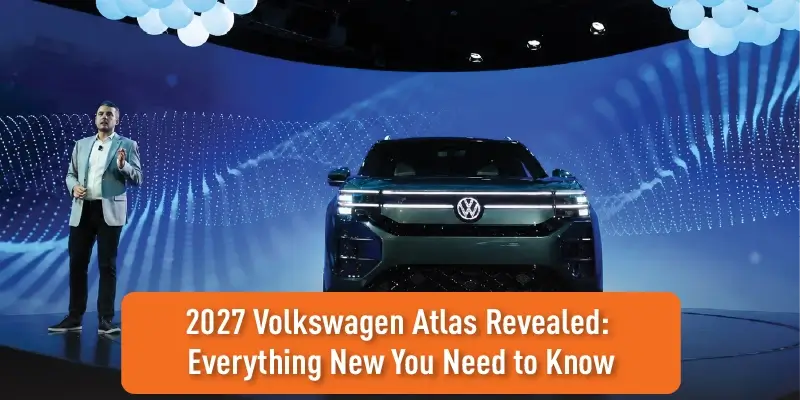
The updated front design features a wider grille and eye-catching dual LED light bars that stretch across the front, giving the SUV a sharper and more modern appearance. Depending on the trim level, an illuminated Volkswagen emblem further enhances the vehicle’s modern appearance, aligning the Atlas with the brand’s latest global design language.
At the rear, a full-width LED light bar creates a cleaner, more upscale finish. Animated lighting elements add a premium touch when locking or unlocking the vehicle, while redesigned alloy wheel options ranging from 18 to 21 inches allow buyers to personalize the Atlas according to their preferred style.
The exterior redesign may not be revolutionary, but it successfully enhances the Atlas’s visual appeal without sacrificing the practicality and understated confidence that have always defined Volkswagen’s flagship family SUV.
Volkswagen Brings Back Physical Controls
Over the last few years, many manufacturers have shifted essential vehicle functions into touchscreen menus. While this approach creates a cleaner dashboard design, it often makes simple adjustments more distracting while driving.
Volkswagen has decided to move in the opposite direction. For the 2027 Atlas, the company introduces an all-new Driver Experience Dial, a physical rotary controller positioned on the center console that provides quick access to commonly used functions without requiring drivers to navigate multiple touchscreen menus.
The multifunction controller simplifies everyday interactions by allowing users to manage audio, switch drive modes, customize ambient lighting, and access essential settings with ease. It’s a seemingly small addition, but one that significantly improves everyday usability, particularly during long highway drives or stop-and-go traffic where constant touchscreen interaction can become frustrating. It’s also an indication that Volkswagen is listening to customer feedback rather than simply following industry trends.
Built for the Way Americans Actually Drive
The Atlas has always been engineered with North American buyers in mind, and that philosophy continues with the second-generation model.
Unlike compact crossovers that can feel cramped on longer journeys, the Atlas is designed to handle the realities of American driving. From lengthy interstate commutes and weekend sports tournaments to summer road trips through national parks, the SUV offers the space and comfort families need when they regularly spend hours behind the wheel.
Volkswagen has also improved cabin insulation, reducing wind and road noise at highway speeds. Combined with revised suspension tuning and more supportive seating, the new Atlas is expected to deliver an even more comfortable driving experience on extended trips.
For drivers living in regions with changing weather conditions, the available 4MOTION all-wheel-drive system continues to provide additional confidence during rain, snow, or light off-road adventures. While the Atlas isn’t intended to be a dedicated off-road SUV, it offers enough capability for gravel roads, mountain cabins, campground access, and other recreational destinations that many families visit throughout the year.
Ultimately, the redesigned cabin isn’t just about adding more technology and it’s about making everyday ownership simpler, quieter, and more enjoyable. By combining practical family-focused features with meaningful usability improvements, Volkswagen has created an interior that feels genuinely competitive in today’s crowded midsize SUV segment.
Final Thoughts
The second-generation 2027 Volkswagen Atlas demonstrates that meaningful evolution often delivers greater value than dramatic reinvention.
The redesigned interior feels considerably more premium, the updated technology enhances convenience without sacrificing usability, and the refined powertrain improves both performance and efficiency. These changes may seem incremental when viewed individually, but together they transform the Atlas into a far more polished and competitive SUV.
In a market crowded with capable competitors, the new Atlas distinguishes itself by offering a balanced ownership experience rather than focusing on a single standout feature. It is designed for families who value comfort on long road trips, confidence in changing weather conditions, and the flexibility to adapt to busy everyday lifestyles.
As pricing and trim details become official later this year, the Atlas is well positioned to remain one of Volkswagen’s most important vehicles in North America and a compelling option for buyers shopping in the midsize SUV segment.
Frequently Asked Questions
When is the 2027 Volkswagen Atlas Release Date?
The 2027 Volkswagen Atlas Release Date is expected in Fall 2026, with U.S. dealerships anticipated to receive inventory between September and November 2026.
What are the key 2027 Volkswagen Atlas Specs?
The 2027 Volkswagen Atlas Specs include a revised 2.0-liter turbocharged engine producing 282 horsepower and 258 lb-ft of torque, an 8-speed automatic transmission, available 4MOTION all-wheel drive, up to 5,000 pounds of towing capacity, and fuel economy of up to 25 MPG combined in front-wheel-drive models.
What is new inside the 2027 Volkswagen Atlas Interior?
The 2027 Volkswagen Atlas Interior features a redesigned dashboard, a standard 12.9-inch touchscreen with an available 15-inch display, a 10.3-inch Digital Cockpit, premium upholstery options, dual wireless phone charging pads, enhanced cabin materials, and Volkswagen’s new Driver Experience Dial that brings physical controls back to frequently used vehicle functions.
Just have a look at Mr.Leecar, where we break down new vehicle launches, explain industry trends, and share expert insights to help American drivers make smarter automotive decisions.


