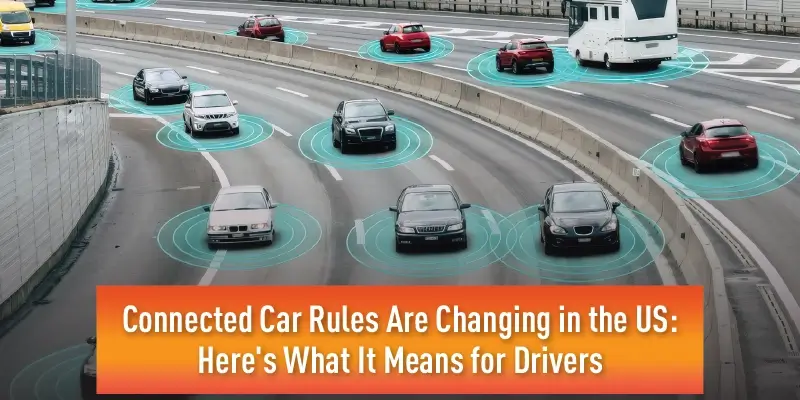
There was a time when buying a new vehicle meant comparing horsepower, fuel economy, reliability, and comfort. Today, choosing a vehicle involves much more than comparing engine performance and fuel economy; buyers are also considering software capabilities, smartphone connectivity, cloud-based services, advanced driver assistance features, and digital subscription options. The automobile has quietly transformed into one of the most sophisticated connected devices consumers own.
Unlike traditional automobiles, connected vehicles generate and exchange an extraordinary amount of digital information. They can learn driving habits, record frequently visited locations, monitor vehicle performance, and support advanced safety technologies through continuous data sharing. As software becomes increasingly responsible for how vehicles operate, cybersecurity is no longer just an IT concern, and it has become a public safety issue.
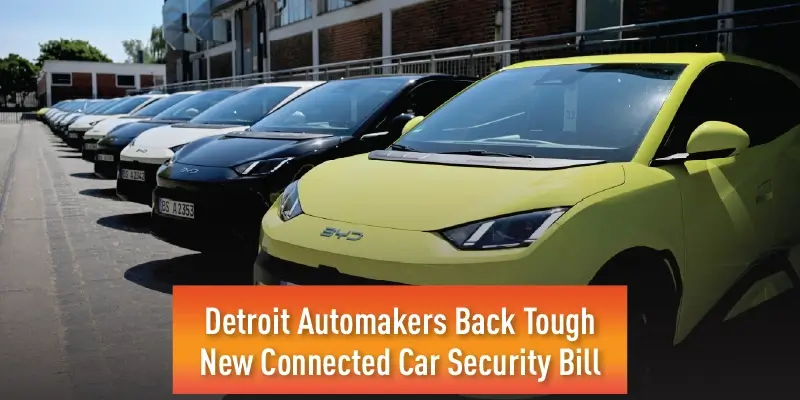
Perhaps the most surprising development is that America’s largest automakers where General Motors, Ford, and Stellantis are not resisting the proposal. Instead, they are supporting stronger federal standards designed to secure connected vehicle technologies and strengthen the integrity of the automotive supply chain.
Their support signals a broader shift within the industry. It is increasingly becoming a competitive advantage that could shape consumer confidence, protect national infrastructure, and influence the future of vehicle manufacturing in the United States.
Why the Connected Vehicle Security Bill Matters Now?
Few industries have evolved as rapidly in recent years as the automotive sector, driven by breakthroughs in connected technology, electrification, and artificial intelligence. Electric vehicles, connected services, artificial intelligence, over-the-air software updates, and semi-autonomous driving systems are becoming standard features rather than premium options. At the same time, global supply chains have become increasingly complex, with hardware and software components often sourced from multiple countries before reaching the final assembly line.
Unlike mechanical components that fail independently, software vulnerabilities can affect thousands or even millions of vehicles simultaneously. A single compromised system could expose sensitive driver information, disrupt connected services, or create security concerns that extend far beyond individual vehicle owners.
Rather than reacting to future cybersecurity incidents, lawmakers are attempting to establish stronger standards that encourage secure software development, trusted supply chains, and responsible handling of driver data from the beginning.
Also Read: Best Electric SUVs Under $50K in 2026
Connected Vehicle Data: Before and After the Proposed Standards
| Area | Without Strong Security Standards | Under the Connected Vehicle Security Act |
|---|---|---|
| Driver Data | Greater uncertainty regarding storage and processing | Enhanced federal oversight and stricter data protection |
| Connected Software | Security practices vary between suppliers | Stronger cybersecurity expectations across manufacturers |
| Supply Chain | Limited transparency for some connected components | Increased visibility into connected technology sourcing |
| Consumer Confidence | Dependent on individual manufacturer practices | Consistent national security-focused framework |
Understanding the Connected Vehicle Security Act
At its core, the Connected Vehicle Security Act is designed to strengthen cybersecurity protections for connected vehicles sold in the United States. While previous regulations have primarily focused on crash safety, emissions, and mechanical reliability, this proposal addresses something entirely different and the digital technologies that increasingly define the modern driving experience.
The legislation focuses on the software, hardware, communication systems, and cloud-connected services that enable today’s vehicles to remain connected long after they leave the dealership. These technologies support everything from real-time navigation and remote diagnostics to emergency response systems and advanced driver assistance features.
Because these systems continuously collect and transmit information, lawmakers argue that they deserve the same level of security oversight as other forms of critical infrastructure.
A major objective of the bill is to reduce reliance on connected vehicle technologies that could potentially introduce cybersecurity risks into the American transportation network. Rather than concentrating solely on finished vehicles, the legislation also examines the origin of key electronic components, connected software platforms, telematics systems, and communication modules that enable vehicles to interact with external networks.
In practical terms, the proposal seeks to ensure that the digital backbone of connected vehicles is developed, sourced, and maintained within security frameworks that meet strict federal standards. For consumers, that means stronger protections around how connected technologies operate behind the scenes, often without drivers ever realizing how much information their vehicles generate every day.
Why GM, Ford, and Stellantis Are Supporting the Legislation?
For generations, automakers have often viewed new federal regulations carefully, weighing the impact of compliance requirements on innovation, costs, and manufacturing operations. Additional compliance requirements often translate into higher development costs, longer certification processes, and increased manufacturing complexity.
The response to the Connected Vehicle Security Act has been noticeably different. General Motors, Ford, and Stellantis have recognized that cybersecurity has become inseparable from vehicle safety. Consumers who purchase connected vehicles expect their personal information to remain secure just as much as they expect airbags or braking systems to function properly.
Industry leaders understand that a large-scale cyberattack targeting connected vehicles could affect far more than a single manufacturer, potentially damaging trust across the broader automotive sector. A large-scale breach affecting navigation systems, cloud-connected services, or vehicle communications would not simply damage one manufacturer’s reputation, and it could reduce public confidence in connected vehicle technology as a whole.
Supporting stronger federal standards therefore serves both public interests and long-term business objectives.
It also provides greater consistency across the industry. Instead of individual manufacturers adopting different cybersecurity practices, a unified federal framework could establish common expectations for connected vehicle security, helping manufacturers, suppliers, and regulators work toward the same goal.
Building a Stronger and More Secure Automotive Supply Chain
Another important reason Detroit supports the legislation is the growing importance of supply chain security.
Modern vehicles contain thousands of electronic components supplied by manufacturers across multiple continents. Semiconductor chips, communication modules, sensors, infotainment processors, and advanced software platforms frequently pass through several suppliers before becoming part of a finished vehicle.
While this global network has made vehicles more technologically advanced, it has also made it more difficult to verify the security of every connected component. The Connected Vehicle Security Act encourages greater visibility throughout this process by placing increased emphasis on trusted sourcing and improved accountability. Rather than relying solely on the finished product, the legislation recognizes that cybersecurity begins much earlier during the design, development, and manufacturing of the technologies that power connected vehicles.
This proactive approach reflects a growing understanding that supply chain security has become just as important as cybersecurity itself.
What the Bill Could Mean for Everyday American Drivers?
For many Americans, cybersecurity feels like an issue reserved for smartphones, laptops, or financial institutions. Yet the average new vehicle sold today contains dozens of internet-connected systems that collect, process, and transmit information every time the engine starts.
The Connected Vehicle Security Act isn’t asking drivers to change how they use their vehicles. Instead, it places greater responsibility on automakers and technology suppliers to ensure that connected systems are designed with security and privacy in mind from the very beginning.
If enacted, the legislation would primarily affect future vehicle production rather than cars already on the road. Consumers who currently own connected vehicles would not suddenly lose features or face restrictions on using their vehicles. Instead, the biggest changes would occur behind the scenes, where manufacturers would be required to meet stricter standards for sourcing connected technologies and protecting customer data.
For drivers, the long-term benefit is greater confidence that the digital systems inside their vehicles have been developed using more secure practices. As connected technology becomes
Final Thoughts
The Connected Vehicle Security Act marks more than another regulatory proposal, and it reflects the automotive industry’s transition into a software-driven future.
As vehicles become increasingly connected, the conversation surrounding safety is expanding beyond crash protection to include cybersecurity, data privacy, and digital resilience. The support shown by General Motors, Ford, and Stellantis demonstrates that these issues are no longer viewed as obstacles to innovation but as essential foundations for the next generation of mobility.
While the legislation continues to move through the legislative process, its broader message is already influencing the automotive industry. Future vehicles will not only be judged by their performance, efficiency, or technology features, but also by how effectively they protect the information and digital systems that power every journey. For American consumers, that shift could ultimately result in safer, more secure, and more trustworthy connected vehicles in the years ahead.
Frequently Asked Questions
What is the Connected Vehicle Security Act?
The Connected Vehicle Security Act is proposed U.S. legislation that aims to strengthen connected vehicle cybersecurity, improve vehicle data privacy, and reduce security risks associated with connected vehicle hardware and software supplied by foreign-linked companies.
Will the Connected Vehicle Security Bill affect current vehicle owners?
No. The legislation is primarily intended to influence the design, sourcing, and cybersecurity standards of future connected vehicles. Current vehicles legally sold in the United States would generally not be affected.
Why are GM, Ford, and Stellantis supporting the Connected Vehicle Security Bill?
The three automakers believe stronger cybersecurity standards can help protect consumer data, improve confidence in connected vehicle technologies, strengthen the U.S. automotive supply chain, and reduce long-term cybersecurity risks across the industry.
For expert car maintenance tips, practical vehicle ownership advice, the latest U.S. automotive news, and upcoming vehicle launches, stay connected with the experts at Mr. Leecar, your trusted source for everything happening in the American automotive world.