

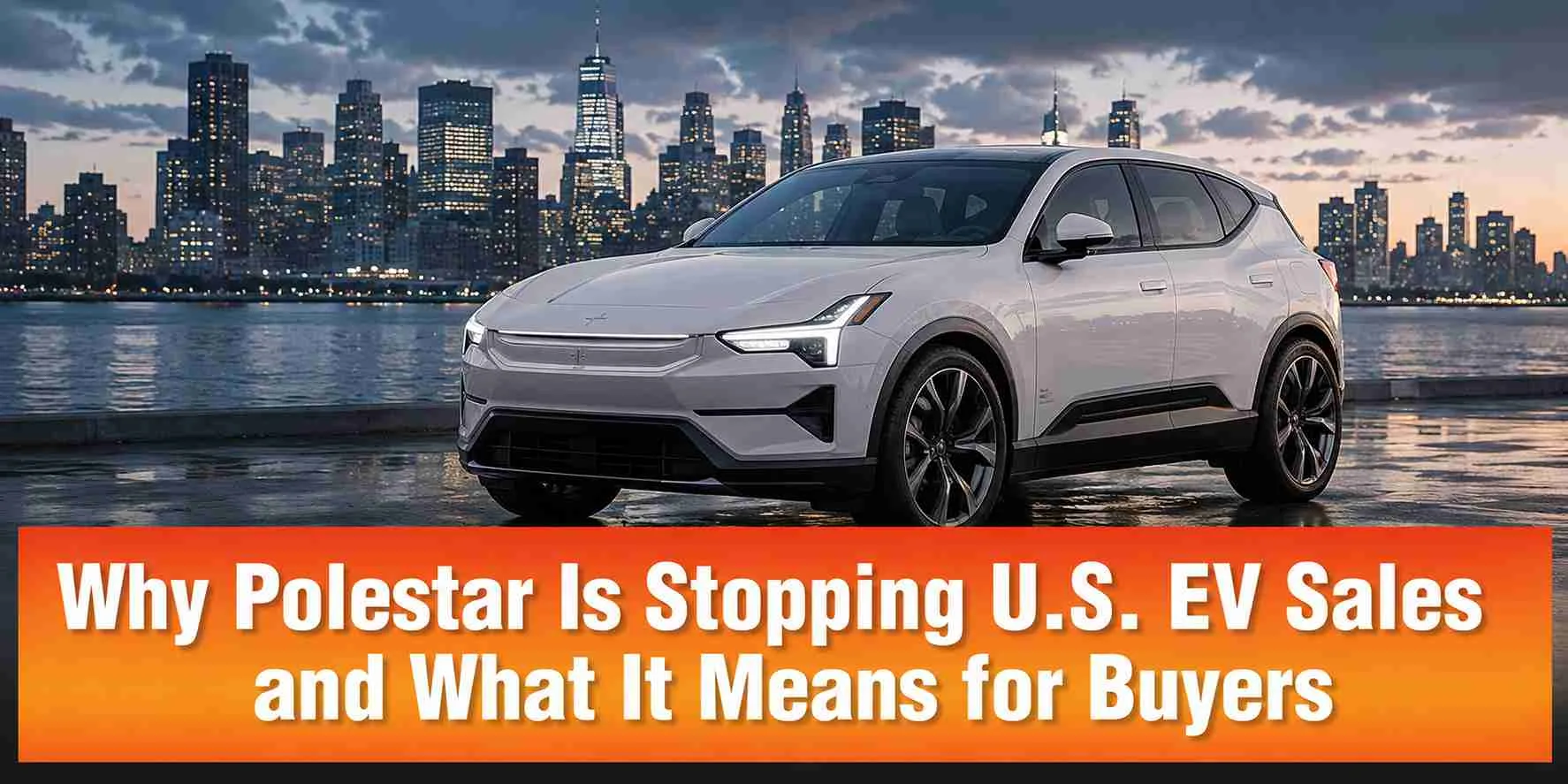
The American electric vehicle market has never been more competitive or more complicated. Over the past few years, consumers have watched legacy automakers expand their EV lineups, new startups challenge industry leaders, and government policies reshape the future of transportation. Now, one of the industry’s most recognizable premium EV brands is making a dramatic exit from the U.S. market.
Polestar, the Swedish-born electric vehicle manufacturer backed by Chinese automotive giant Geely, has announced that it will effectively stop selling new vehicles in the United States beginning with the 2027 model year. For a company that invested heavily in North America and even assembled vehicles in South Carolina, the decision has surprised many consumers and industry observers.
At first glance, the news may appear to signal trouble for the brand. However, the reality is far more complex. Polestar is not shutting down, nor is it experiencing a collapse in global demand. Instead, the company’s departure highlights a growing trend that could influence the future of EV buying in America: the increasing role of cybersecurity regulations, software infrastructure, and geopolitical policies in determining which vehicles reach U.S. consumers.
Why Is Polestar Leaving the U.S. Market?
Unlike many automotive exits in the past, Polestar’s departure is not being driven by weak sales performance, poor vehicle quality, or declining customer interest. The company continues to see strong demand in several international markets and has reported healthy growth globally. The primary factor behind the decision is regulatory compliance.
In response to growing cybersecurity concerns, the United States has introduced stricter regulations governing connected vehicle technologies. These rules focus on protecting sensitive vehicle data and reducing potential security risks associated with foreign-controlled software and hardware systems.
Because Polestar operates within the broader Geely ecosystem and maintains deep integration with technologies connected to its parent company, regulatory challenges have created significant barriers to continued sales in the American market beyond 2026.
Understanding America's Connected Vehicle Rule
Modern vehicles collect enormous amounts of information. Navigation systems track location data. Connected apps communicate with cloud servers. Cameras, sensors, and advanced driver assistance systems continuously gather operational information.
Federal policymakers increasingly view these technologies as potential cybersecurity concerns if the underlying systems are linked to governments or organizations that may not align with U.S. security interests.
Interestingly, not all Geely-owned brands have faced the same outcome. While Volvo successfully navigated the regulatory process through structural and operational adjustments, Polestar was unable to secure the necessary authorization for future U.S. sales.
Polestar's Global Business Remains Strong
Polestar continues to perform strongly in several major markets and remains committed to expanding its international presence. Recent global sales figures demonstrate that the company is still attracting buyers who value Scandinavian design, advanced technology, and premium electric mobility.
One reason the company can afford to leave the United States is that America represents a relatively small portion of its overall business. The majority of Polestar’s sales come from Europe, where the brand has established a strong reputation among premium EV buyers.
Countries such as Germany, Sweden, Norway, the Netherlands, and the United Kingdom continue to generate substantial demand. In these markets, government incentives, charging infrastructure expansion, and consumer acceptance of electric vehicles remain favorable.
Rather than fighting an expensive regulatory battle in the United States, the company appears focused on directing resources toward regions where future growth opportunities are clearer and more predictable.
What Current Polestar Owners Need to Know?
Polestar has confirmed that current warranty obligations will continue to be honored. Customers who purchased vehicles with factory warranty coverage should continue receiving support according to the terms of their agreements.
Service operations are also expected to remain active. Existing retail and service locations will continue supporting owners through maintenance programs, recalls, replacement parts, and customer assistance services.
This is an important distinction because a market exit does not necessarily mean a company disappears entirely. Manufacturers often maintain support networks for years after ending local vehicle sales.
Software support is another critical consideration. Since Polestar remains active globally, existing vehicles are expected to continue receiving over-the-air updates, security patches, infotainment improvements, and performance enhancements.
For current owners, the experience of owning and maintaining a Polestar should remain largely unchanged in the near future.
Why Some Buyers Are Rushing to Purchase a Polestar?
Dealers holding remaining inventory typically become highly motivated to move vehicles before demand uncertainty grows. This can create significant discounts for consumers willing to take advantage of the situation.
The Polestar 3 and Polestar 4 compete directly with premium electric vehicles from established luxury brands while offering distinctive Scandinavian styling, advanced safety systems, and modern technology. As dealerships work through remaining inventory, buyers may find pricing opportunities that would have been difficult to imagine just a year ago.
The situation creates an unusual market dynamic where consumers can potentially purchase a premium EV at a substantially reduced cost compared to competing models.
Potential Benefits of Buying a Polestar Today
| Factor | Potential Advantage |
|---|---|
| Purchase Price | Significant dealer discounts |
| Luxury Features | Premium interior and technology |
| Safety Systems | Advanced driver assistance features |
| Warranty Coverage | Existing factory warranty remains valid |
| Software Support | Continued over-the-air updates expected |
| Long-Term Ownership Value | Strong value for drivers planning to keep the vehicle for years |
For buyers focused on maximizing value rather than resale performance, these discounts could make Polestar one of the most compelling EV opportunities currently available.
The Hidden Risk: Depreciation Could Accelerate
While lower prices are attractive, prospective buyers should also consider the long-term financial implications. Historically, vehicles produced by brands that exit a market often experience sharper depreciation than competitors. This does not necessarily reflect vehicle quality. Instead, it reflects consumer perception.
Many used-car buyers become hesitant when a manufacturer is no longer actively selling new vehicles in the country. Concerns about long-term support, parts availability, and future demand can reduce resale values.
For drivers who trade vehicles every few years, this can become a significant financial consideration. On the other hand, buyers who intend to keep a vehicle for seven years or longer may be less affected. In these cases, the savings achieved through discounted purchase prices can outweigh future resale concerns.
Final Thoughts: Polestar's Exit Reveals About EV Buying Trends in 2026
Supply chains now influence purchasing decisions more than ever before. Consumers are paying attention to where batteries are manufactured, where semiconductors originate, and how software systems are developed. At the same time, governments are expanding oversight of connected technologies, cybersecurity standards, and data management practices.
As vehicles become increasingly software-driven, automakers must navigate both technological innovation and regulatory compliance. This trend is likely to continue throughout the decade. Industry analysts expect further consolidation among manufacturers as compliance costs increase and software ecosystems become more complex. Brands capable of demonstrating transparency, security, and regulatory readiness may gain competitive advantages in the years ahead.
Frequently Asked Questions
Can I still buy a new Polestar in the United States in 2026?
Yes. Remaining inventory of the Polestar 3 and Polestar 4 can still be purchased through authorized retailers. However, future model-year Polestar vehicles are not expected to be sold in the U.S. market under current regulations.
Will my Polestar warranty and service support remain active?
Yes. Existing warranty coverage, maintenance services, recalls, replacement parts, and customer support are expected to continue for current Polestar owners in the United States.
Is buying a discounted Polestar a smart EV investment in 2026?
A discounted Polestar can offer strong value for buyers planning long-term ownership. However, consumers concerned about resale value should carefully consider the potential impact of accelerated depreciation following the brand’s U.S. exit.
For the latest EV insights, car-buying hacks, ownership tips, breaking automotive news, and upcoming vehicle launches, just have a look at Mr.Leecar. Our experts track the latest U.S. car trends, industry developments, and vehicle launches to help you stay informed and make smarter automotive decisions


