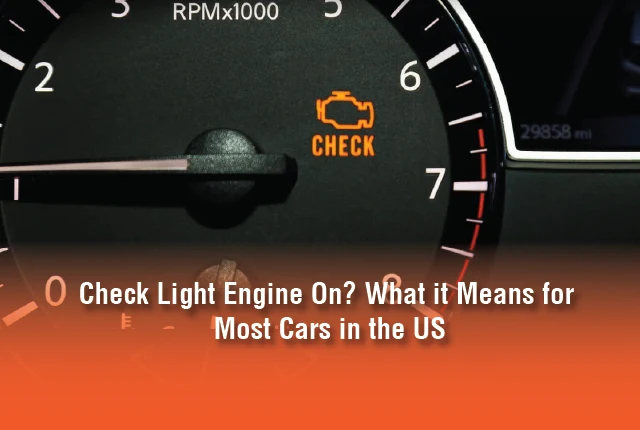
It’s a mandatory scenario every American driver dreads: you’re cruising down the I-95 or navigating a busy city intersection when a glowing amber icon suddenly pops up on your dashboard. Your heart sinks. It’s the Malfunction Indicator Lamp, more commonly known as the check engine light.
But before you pull over in a panic, take a deep breath. In most U.S. vehicles, that little light is less of a stop immediately command and more of a hey, we need to talk notification from your car’s computer. Understanding the check engine light meaning can save you thousands of dollars in repairs and plenty of unnecessary stress.
Decoding the Dash: Why Your Car is Talking to You
At its core, the check engine light is the mouthpiece for your car’s On-Board Diagnostics system. This diagnostic system has been a federal requirement on all U.S. vehicles for nearly three decades. When the engine warning light is triggered, it implies that the vehicle’s Engine Control Unit has detected a problem in the emission, fuel, or ignition system that could cause the vehicle to exceed federal emission standards.
Whether you drive a heavy-duty Ford F-150, a sleek Tesla, or a reliable Toyota Camry, the system works similarly: sensors throughout the car monitor performance, and when something goes out of spec, it logs one of many car diagnostic trouble codes. Think of it as your car’s way of sending a distress signal before a minor glitch becomes a highway breakdown.
The Usual Suspects: Most Frequent Culprits Behind the Glow
While there are hundreds of possible codes, a few usual suspects account for the vast majority of alerts in the United States. According to recent vehicle health reports, here are the most common check engine light problems:
- The Infamous Gas Cap: Believe it or not, this is one of the top check engine light causes. Your car’s fuel system is pressurized; if the cap isn’t tight or the seal is cracked, vapors escape, and the light pops on. It’s a $15 fix that saves a $150 diagnostic fee.
- The O2 Sensor Fail: This sensor measures how much unburned oxygen is in the exhaust. If it fails, your engine burns more fuel than necessary, absolutely tanking your MPG, a nightmare with today’s fuel prices.
- The Catalytic Converter Crisis: This part converts harmful gases into less harmful emissions. If you ignore a faulty O2 sensor or spark plugs, the catalytic converter is usually the next thing to break, and it’s one of the most expensive parts to replace in the U.S.
- Ignition Woes: In the U.S., where many drivers commute long distances, worn-out spark plugs and ignition coils are frequent culprits. They cause the engine to misfire, leading to a shaky idle and poor acceleration.
Red Alert or Minor Glitch? Knowing When to Pull Over
The answer to whether it is safe to drive with the check engine light on depends entirely on the light’s behavior. Ignoring the wrong signal could be the difference between a quick sensor swap and a total engine rebuild.
The Steady Glow: The To-Do List Phase
If the check engine light is on but remains steady, it generally indicates a non-emergency issue. You don’t need to call a tow truck immediately, but you should schedule a diagnostic appointment within the week. Your car is likely still drivable, but it’s essentially running in a safe mode, which isn’t optimal for performance.
The Flashing Warning: The Emergency Phase
A flashing check engine light is the automotive version of a fire alarm. This usually indicates a severe engine misfire that is currently dumping unburned fuel into the exhaust system. This can quickly overheat and destroy your catalytic converter or lead to catastrophic engine failure. If it’s blinking, pull over immediately.
Your 4-Step Survival Plan: From Panic to Fixed
When that light hits your dash, don’t just hope it goes away. Here is a high-impact action plan to address the engine light on what to do:
- The Gas Cap Twist: Before spending a dime, pull over and ensure your gas cap is clicked tight. It may take a few miles of driving for the system to reset and the light to disappear.
- Verify Limp Mode: Many modern U.S. cars will enter a limp mode to protect the drivetrain, significantly reducing power. If your car suddenly feels like it’s struggling to reach 40 mph, head straight to a mechanic.
- Plug into the Brain: You don’t have to be a master mechanic to find the check engine light meaning. You can buy an inexpensive OBD-II scanner at any auto parts store. Plug it into the port usually under the driver’s side dash to reveal the specific car diagnostic trouble codes like P0420 or P0300.
- Listen and Feel: Use your senses. Listen for unusual knocks and feel for vibrations. If the car feels fine and the light is steady, you likely have a minor sensor issue rather than a mechanical failure.
The Road Ahead: Decode It and Drive Smarter
The check engine light isn’t your car’s way of ruining your day; it’s your early warning system. For American drivers navigating long commutes, interstate highways, and stop-and-go city traffic, understanding what that amber glow means can make the difference between a simple fix and a four-figure repair bill.
In most cases, a steady check engine light is a manageable issue that gives you time to act. Something as simple as tightening a gas cap or replacing a worn sensor can restore performance, fuel efficiency, and peace of mind. On the other hand, a flashing light is your cue to act immediately, protecting critical components like the catalytic converter and engine internals.
The smartest move is proactive ownership: pay attention to how your car feels, scan the diagnostic codes when possible, and address problems early. Modern vehicles are designed to warn you before failure, not after it. Treat the check engine light as a conversation starter with your car, not a panic button.
Frequently Asked Questions
1. What does the check engine light mean if the car is driving fine?
Even if the car feels normal, the check engine light usually indicates an emissions problem or a sensor that is starting to fail. Ignoring it can lead to worse fuel economy and can eventually damage more expensive parts like the catalytic converter. In many states, you also won’t pass your annual inspection with the light on.
2. Can a low battery or cold weather trigger the light?
Yes! Modern car computers are incredibly sensitive to voltage. If your battery is struggling in a cold U.S. winter, it can cause the computer to throw ghost car diagnostic trouble codes. Always have your battery and alternator tested if the light appears during a sudden cold snap.
3. Will the light go off on its own after a repair?
In many cases, yes. Once the check engine light causes are fixed, the car needs to complete a drive cycle, usually about 50–100 miles of mixed highway and city driving, before the computer realizes the problem is gone and turns the light off automatically.
For more DIY hacks, expert car tips, or the latest on U.S. vehicle trends. Take a look at Mr. Lee Car Experts for US-based car trends, news, and launches!