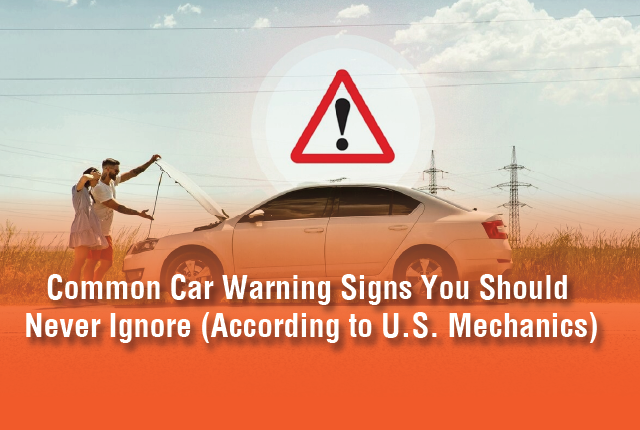
Just imagine, you’re cruising down a Texas highway, radio blasting, when a tiny light flickers on your dashboard. Ignore it? Big mistake. U.S. mechanics see it all the time where folks brush off car warning signs until a breakdown strands them roadside. As a person like me with a keen interest in automotive trends, I have chatted with mechanics from Houston shops to L.A. garages. Their consensus? Certain car trouble symptoms demand immediate action. Left unchecked, these issues can escalate into serious safety hazards and major repair expenses..
This isn’t scare tactics; it’s straight mechanic wisdom. Below, we’ll break down the vehicle warning signs checklist every driver needs. From dashboard warning lights meaning to subtle signs your car needs repair, heed these to keep your ride reliable. Let’s get into the blog where those red flags ruin your car.
1. Dashboard Warning Lights: The First Red Flag
Your dashboard is like your car’s nervous system. Those glowing icons? They’re screaming for attention. The check engine light tops the list of car warning signs mechanics see ignored the most. It flashes for everything from a loose gas cap to faulty oxygen sensors or catalytic converter woes, issues that spike emissions and tank fuel economy.
- Oil pressure light: A blinking oil pressure light can mean low pressure. Driving on? You’ll seize your engine. U.S. shops replace fried motors weekly due to ignored warnings.
- Brake warning light: Red brake symbol or BRAKE text? Low fluid, worn pads, or failing calipers. Mechanics say this tops the brake warning signs list: pull over now.
- Battery light: Dimming alternator or dying battery. Coast too far, and you’re jump-starting in traffic.
Expert tip: Google your model’s dashboard warning lights meaning ASAP, but don’t DIY complex fixes. Head to a trusted shop and diagnose it.
2. Engine Warning Signs That Spell Trouble
Beyond lights, listen to your engine. Mechanics in the Midwest swear by the sniff test for engine warning signs. Burning oil? Blue exhaust smoke signals worn piston rings or valve seals. White smoke? Head gasket failure and fix it before your coolant mixes with oil.
Strange noises top the signs your car needs repair:
- Knocking or pinging: Bad fuel, timing issues, or detonation. Premium gas might help short-term, but scan it.
- Squealing belts: Worn serpentine belt. It powers your alternator, AC, and more, and you’re overheating.
Overheating is a killer. Steam from the hood? Car safety issues ahead. Pulled a trailer lately? Radiator clogs love heavy loads. Mechanics advise: Stop, let it cool, tow if needed.
3. Brake Warning Signs You Can’t Afford to Miss
Brakes aren’t optional. U.S. mechanics field panicked calls daily over spongy pedals,, which is a classic brake warning sign. Air in the lines or leaking calipers? Pump the pedal before panic-braking fails.
Other red flags:
- Grinding or squealing: Metal-on-metal pads. Texas heat accelerates wear and requires replacement before brake pulsation reformation.
- Pulling to one side: Stuck caliper. Uneven braking risks hydroplaning in the rain.
The NHTSA reports brake failures cause thousands of crashes yearly. If your pedal sinks to the floor, that’s a car trouble symptom yelling service now!
4. Other Sneaky Car Safety Issues Mechanics Flag
Tires tell tales, too. Bulges, uneven tread, or vibrations? Alignment or blowout risks. Check pressure weekly through underinflation, which slashes MPG and grip.
Transmission slips or RPMs rise without speed? Fluid’s low or burnt. Steering wheel shake at 60 mph? The wheel balance or tie rods shot.
Exhaust rattles or a rotten egg smell? Catalytic converter failing and emissions test nightmare incoming.
Mechanic Warning Advice: Act Fast, Save from Big Issues
Top U.S. mechanics, from AAA-certified shops to indie pros, push prevention. Scan codes with an OBD-II reader under $50 at AutoZone. Rotate tires every 5,000 miles. Oil changes? Every 3-5K, not the lifetime myth.
Ignoring car warning signs balloons costs: $100 fix today vs. $5,000 tomorrow. Prioritize car safety issues and your family’s on board.
The Road Ahead: Fix the Small Warnings Before Big Failures
Cars rarely fail without warning. As mechanics across the U.S. will tell you, breakdowns are almost always the result of ignored signals, not sudden bad luck. Dashboard lights, unusual noises, brake feel changes, or subtle performance drops are your vehicle’s early-warning system designed to save you money, time, and potentially your life.
Addressing car trouble symptoms early doesn’t just protect your wallet; it protects everyone on the road. What starts as a minor sensor alert or worn component can quickly escalate into engine damage, brake failure, or roadside emergencies if left unchecked. The smartest drivers aren’t the ones who know how to fix everything themselves and they’re the ones who know when to act.
Everything You Need to Know
1. What are the most common car warning signs to watch for?
Car warning signs like the check engine light, oil pressure alert, and brake warning signs top lists. Use this vehicle warning signs checklist to stay ahead of car trouble symptoms.
2. What does the dashboard warning lights mean to tell me about engine issues?
Dashboard warning lights meaning for engine warning signs often point to sensors, fuel mix, or emissions. Signs your car needs repair include rough idling to get a diagnostic scan promptly.
3. How can I create a personal vehicle warning signs checklist?
Build your vehicle warning signs checklist around car safety issues, mechanic warning advice, and daily checks like tire pressure and fluid levels. It flags signs your car needs repair early.
For quick hacks like DIY oil checks or seasonal tire swaps, Have a look at Mr. Lee Car Experts, your hub for the U.S. based car trends, car news, and launches!