For the modern American driver, the vehicle is often the second-largest investment after their home. However, as we navigate 2026, the financial landscape of vehicle ownership has shifted. Between rising labor rates at dealerships and the increasing complexity of hybrid and turbocharged engines, the average car maintenance cost has become a pivotal line item in the household budget.
While it may feel counterintuitive to spend money when your car is running just fine, failing to invest in preventive car maintenance is one of the most expensive mistakes a consumer can make. By understanding the long-term economics of the automotive industry, U.S. car owners can transform their vehicle from a money pit into a reliable, high-value asset.
The ROI of Prevention: Why Maintenance is an Investment, Not an Expense
In the United States, the average age of cars on the road has climbed to over 12 years. This longevity is only possible through consistent care. When you analyze auto maintenance costs, you must weigh them against the staggering price of modern vehicle replacement. With the average new car price hovering near $50,000, extending the life of your current vehicle by just three years through routine car maintenance can save you tens of thousands of dollars in interest and depreciation.
The benefits of regular car maintenance extend far beyond the engine bay. A well-maintained vehicle operates at peak thermal efficiency, meaning you spend less at the pump,a critical factor given the volatility of fuel prices in today’s market.
Mitigating Risk: Avoiding Catastrophic Car Repair Costs
The primary goal of a professional maintenance strategy is risk mitigation. Most high-ticket car repair costs are not the result of freak accidents; they are the result of cumulative neglect.
- The Transmission Trap: A transmission fluid flush might cost $200 to $300. Ignoring it can lead to a total transmission failure, which in 2026 often costs between $4,500 and $7,500.
- The Cooling System Catalyst: A simple coolant exchange ensures your engine doesn’t warp under high heat. If the system fails, you aren’t just looking at a new radiator; you’re looking at a blown head gasket or a cracked engine block repairs that often exceed the book value of the car.
By adhering to a professional car maintenance checklist, you effectively cap your spending at predictable intervals rather than facing emergency expenses that disrupt your financial stability.
Professional Car Maintenance Checklist for the Modern Driver
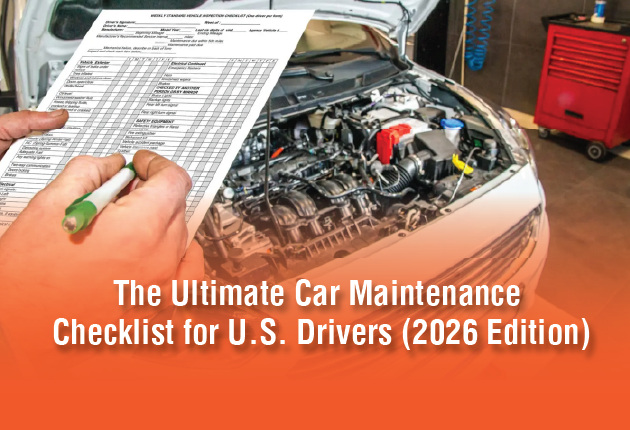
To keep your vehicle maintenance costs manageable, U.S. owners should follow a tiered service hierarchy:
- The Monthly Walk-Around: Check tire pressures and fluid levels. Under-inflated tires are a leading cause of premature tread wear and poor fuel economy.
- The Semi-Annual Professional Inspection: Every six months, have a certified technician inspect the wear items such as brake pads, belts, and hoses. Catching a hairline crack in a serpentine belt today prevents a roadside breakdown tomorrow.
- The Major Interval Service: At 30k, 60k, and 90k miles, perform deep-system services. This includes spark plug replacement, timing belt inspection, and differential fluid changes.
How to Save Money on Car Repairs
Navigating the service department requires a strategic approach. To effectively lower the cost of car maintenance without sacrificing quality, consider these professional car maintenance tips:
- Prioritize Vital Fluids: Oil is the lifeblood of your engine, but don’t ignore brake fluid and power steering fluid. These are hygroscopic as they absorb moisture, which can lead to internal corrosion if not changed.
- Utilize Independent Specialists: While dealerships are excellent for warranty work, reputable independent shops often offer lower labor rates for routine car maintenance, saving you 15% to 20% on every visit.
- Leverage Digital Records: Use apps or digital logs to track your service history. A car with a Full Service History commands a significantly higher resale price in the private U.S. market, often recouping your maintenance spend at the time of sale.
Final Thoughts: Smart Maintenance Is the Most Profitable Automotive Decision
In 2026, car ownership in the United States is no longer just about mobility, and it’s about financial strategy. As vehicles become more complex and replacement costs continue to rise, preventive car maintenance stands out as one of the few controllable variables in the total cost of ownership. Routine inspections, timely fluid services, and adherence to a professional maintenance schedule don’t merely prevent breakdowns; they protect your capital, stabilize your monthly budget, and extend the usable life of a major investment.Ultimately, the most cost-effective car is not the newest one on the market, but the one you already own and maintain correctly. By treating maintenance as a long-term investment rather than a short-term expense, American drivers can avoid catastrophic repair bills, preserve resale value, and enjoy consistent reliability for years to come. In a market defined by uncertainty, disciplined vehicle care remains one of the smartest financial decisions a car owner can make.
Frequently Asked Questions
1. Is the dealer-recommended car maintenance cost always necessary for my warranty? Under the Magnuson-Moss Warranty Act in the U.S., you are not required to have your car serviced at the dealership to keep your warranty valid. As long as you perform the routine car maintenance specified in your owner’s manual and keep the receipts, your warranty remains intact. This is a key way to reduce auto maintenance costs by shopping for competitive labor rates.
2. How do I know which car repair costs to prioritize if I’m on a budget?
Always prioritize safety and engine-critical items. Brakes, tires, and timing belts should never be delayed. Cosmetic issues or minor sensor errors that don’t affect drivability can often wait, but skipping preventive car maintenance on the cooling or lubrication systems will always cost more in the long run.
3. Does frequent stop-and-go traffic in U.S. cities increase my vehicle maintenance costs?
Yes. Most manufacturers classify city driving as Severe Conditions. If you frequently drive in heavy traffic, you should follow the Severe schedule in your manual, which usually requires more frequent oil changes and brake inspections to avoid high car repair costs later.For more expert hacks or car tips, have a look at Mr. Lee Car Experts, the premier destination for US-based car trends, car news, and the latest launches.