

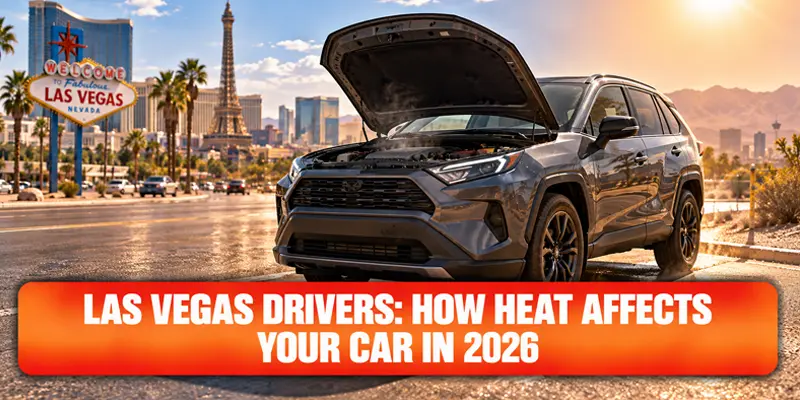
A Las Vegas summer can be hard on a car long before the temperature gauge gives you a reason to worry. You may start the morning with a normal commute, stop for lunch near the Strip, and return to your vehicle several hours later to find the steering wheel too hot to touch. Under the hood, however, the heat is doing more than making the cabin uncomfortable. It is accelerating battery wear, increasing tire stress, and forcing the engine cooling system to work harder.
That matters even more during prolonged heat waves. The National Weather Service records show just how extreme Las Vegas summers can become. In 2024, Las Vegas recorded 30 days with highs of at least 110°F, including 11 consecutive days at or above 110°F. The city also experienced seven consecutive days at 115°F or higher that July.
The urban heat-island effect adds another local factor. The National Weather Service notes that areas around downtown Las Vegas and the Strip can remain significantly warmer than outlying parts of the valley, particularly on summer nights. For local drivers, that means summer car care is not simply about keeping the air conditioning cold. It is about protecting the systems that keep your vehicle running when the environment is working against it.
Why Las Vegas Heat Is Hard on Vehicles
Your vehicle is designed to operate across a wide range of temperatures, but extreme desert heat changes the conditions under which several components operate. The engine generates its own heat. The battery sits in or near a hot engine compartment on many vehicles. Tires absorb heat from the road while also flexing continuously at highway speeds. Fluids, hoses, seals, and electrical components are exposed to repeated thermal stress.
The important point is that heat damage is often cumulative. A battery may still start the car today. A tire may still have plenty of tread. The temperature gauge may remain exactly where it normally sits. That does not necessarily mean the heat has had no effect. This is why Las Vegas car heat should be treated as a maintenance issue, not simply a weather inconvenience.
Also Read: Summer Car Care Tips for Drivers in Phoenix
1. Your Car Battery May Be Taking the Biggest Hit
When drivers think about dead batteries, cold weather usually gets the blame. In reality, extreme heat can be particularly damaging over the long term.
According to AAA, heat accelerates the chemical reactions inside a battery and can contribute to fluid evaporation and internal degradation. Batteries that might last longer in cooler climates commonly have shorter service lives in hot regions, with around three years being typical in many southern areas. That makes car battery problems in hot weather a serious concern for Las Vegas drivers.
What happens inside the battery?
High under-hood temperatures can accelerate electrolyte loss and corrosion of internal components. Repeated vibration from normal driving adds another source of stress.
Your vehicle may begin with a slightly slower crank. Later, you may notice dimming lights, clicking when starting or an occasional need for a jump. Eventually, the battery may fail when you least expect it.
The challenge is that a battery can appear completely normal until it reaches the point where it no longer has enough reserve capacity to start the engine.
2. Your Tires Feel the Heat Too
Your tires have a difficult job in Las Vegas. They have to maintain traction while carrying the vehicle’s weight, absorbing road imperfections and generating friction against extremely hot pavement.
The biggest concern is not simply that the rubber gets hot. It is the combination of heat, tire pressure, speed, load and tire condition. An underinflated tire flexes more as it rolls. That flexing generates additional heat inside the tire, increasing stress on the tire’s structure. NHTSA recommends checking tire pressure regularly and emphasizes that pressure should be measured when the tires are cool.
Instead, check the tires when they have been sitting and are cool, ideally before driving for the day. Set them according to the vehicle manufacturer’s recommended cold pressure—not the maximum pressure printed on the tire sidewall.
3. Engine Overheating in Las Vegas Can Start With a Small Problem
Modern engines are designed to maintain a relatively stable operating temperature, even when outside temperatures are extreme. But that cooling system has limits. Las Vegas summer conditions can expose weaknesses that might go unnoticed during milder weather.
A low coolant level, aging radiator hose, restricted radiator, malfunctioning cooling fan, weak water pump or faulty thermostat can become a major problem when the engine is already dealing with triple-digit temperatures.
The National Weather Service describes Las Vegas summers as routinely reaching triple-digit temperatures, with July and August among the hottest periods of the year.
The cooling system deserves special attention
Before peak summer heat arrives, check the condition of:
Coolant: Make sure the level is correct and look for signs of leaks or contamination. Follow the vehicle manufacturer’s recommended coolant type and service interval rather than mixing fluids simply because they appear similar.
Radiator and condenser: Dirt, debris, and insects can restrict airflow through the cooling fins. That can reduce the system’s ability to transfer heat.
Hoses and belts: Look for cracks, swelling, soft spots, or visible deterioration.
Cooling fans: An electric cooling fan that fails to operate properly can become particularly noticeable in stop-and-go traffic, when natural airflow through the radiator is limited.
Engine oil: Use the viscosity and specification recommended by the vehicle manufacturer. Do not automatically switch to a thicker oil simply because Las Vegas is hot. The correct oil specification matters more than choosing a heavier grade on your own.
4. Why Stop-and-Go Traffic Can Be Harder Than Highway Driving
A common Las Vegas driving pattern creates a particularly challenging combination: extreme heat plus low vehicle speed.
At highway speed, air naturally moves through the front of the vehicle and helps the cooling system reject heat. In heavy traffic, that airflow is reduced and the cooling fans have to do more of the work.
That is why a vehicle that behaves normally on the freeway can begin showing signs of cooling-system trouble while idling in traffic.
If the temperature gauge starts climbing above its normal position, treat it as a warning not something to monitor casually while continuing toward your destination.
If the engine begins overheating, turn off the A/C and safely pull over as soon as possible. If you cannot stop immediately, turning on the heater can temporarily transfer some engine heat into the cabin, but this is only an emergency measure while you find a safe place to stop. Once stopped, shut the engine off and allow it to cool. Never remove a radiator or coolant-system cap while the system is hot.
5. Heat Can Also Expose Weaknesses You Cannot See
Battery, tires, and cooling systems deserve the most attention, but Las Vegas heat affects other parts of the vehicle as well. Repeated sun exposure can accelerate deterioration of dashboards, plastics, leather and other interior materials. AAA also notes that UV exposure and heat can contribute to paint oxidation and interior damage.
Rubber components throughout the vehicle can also age faster under repeated heat exposure. That includes hoses, seals, and other components that may not receive much attention during routine oil changes.
A technician inspecting the vehicle can identify small problems such as a weak battery, deteriorating hose or abnormal tire wear before extreme temperatures turn them into roadside failures.
A Practical Las Vegas Summer Car Care Checklist
You do not need an elaborate maintenance routine to reduce heat-related problems. The key is to check the right components at the right time.
Before the hottest months
Have the battery tested and inspect the terminals for corrosion. Check the charging system if the battery has shown any signs of weakness.
Check all four tires and the spare, if your vehicle has one. Set tire pressure according to the manufacturer’s cold-pressure specification.
Inspect coolant level, hoses, belts, and visible signs of leaks. If your vehicle is approaching a scheduled cooling-system service, do not postpone it simply because the car is currently running normally. Check engine oil and other fluids according to the manufacturer’s maintenance schedule.
Final Thoughts
A useful way to think about extreme heat car maintenance is as a pre-summer stress test. Las Vegas drivers do not have to avoid summer driving. They simply need to recognize that desert conditions change the maintenance priorities of a vehicle. A car that receives routine inspections, correct tire inflation, and timely fluid and battery service is much better positioned to handle a 110°F afternoon than one that is maintained only when a warning light appears.
And remember the goal is not to predict the exact day a component will fail. It is to identify the components most likely to be stressed by the local climate and address them before they become an emergency.
Frequently Asked Questions
How does Las Vegas heat affect a car battery?
Extreme Las Vegas car heat accelerates battery degradation, contributes to electrolyte evaporation, and increases internal corrosion. AAA notes that batteries in hot climates often have shorter service lives than those in cooler regions.
How often should I check tire pressure in hot weather?
Check your tires regularly and measure them when they are cold, preferably before driving. Hot tires naturally show higher pressure after driving. Always use the vehicle manufacturer’s recommended cold inflation pressure rather than adjusting pressure based on a hot reading.
What should I do if my car overheats in Las Vegas?
Turn off the A/C, safely pull off the road, and shut the engine down once you are in a safe location. Do not open the radiator or coolant-system cap while the engine is hot. If you see steam or suspect a serious cooling-system failure, wait for professional assistance rather than continuing to drive.
For more automotive hacks, practical car tips, US-based car trends, news, and new vehicle launches, just have a look at Mr.Leecar experts.

